










RBI Plans Plastic Currency Notes in India; ₹10 & ₹20 Polymer Note Trial to Begin Soon
The Reserve Bank of India is set to begin a pilot project for polymer (plastic) currency notes. The trial will reportedly start with ₹10 and ₹20 notes, while a nationwide rollout could begin by 2027.
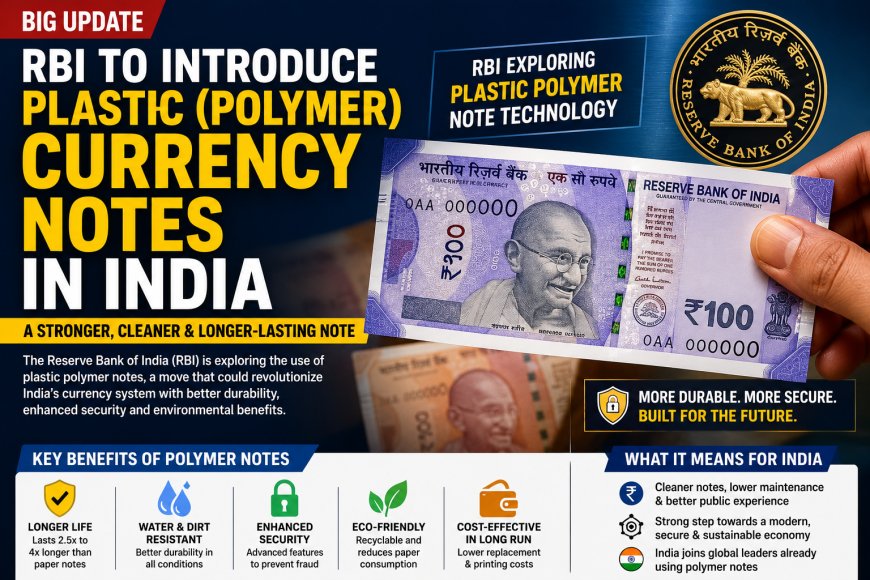
India may soon witness a major transformation in its currency system as the Reserve Bank of India (RBI) is reportedly preparing to introduce polymer (plastic) banknotes through a pilot project. The initiative is aimed at testing a new generation of currency that is expected to be more durable, secure, and cost-effective than traditional paper notes.
According to media reports, the pilot phase is likely to begin with ₹10 and ₹20 denomination notes, with a nationwide rollout expected in the coming years if the trial proves successful.
Pilot Project to Start With ₹10 and ₹20 Notes
As part of the initial phase, the RBI is expected to test ₹10 and ₹20 polymer notes in selected regions.
These lower-denomination notes have been chosen to evaluate how polymer currency performs in everyday circulation. The central bank will study factors such as durability, public acceptance, handling, and printing efficiency before deciding on a larger rollout.
Nationwide Rollout May Begin in 2027
If the pilot project delivers positive results, the RBI is expected to gradually expand the use of polymer currency across India.
Reports suggest that a full-scale rollout could begin in 2027, although the final timeline will depend on the outcome of the trial and the RBI's assessment.
Existing Paper Notes Will Continue
The introduction of polymer notes does not mean that existing paper currency will be withdrawn immediately.
Instead, both paper and polymer notes are expected to circulate together for a considerable period. The transition will be gradual, ensuring that the public and banking system adapt smoothly to the new currency.
RBI Invites Global Suppliers
To move the project forward, the RBI's currency printing unit has issued a global Expression of Interest (EOI) seeking manufacturers capable of supplying polymer substrate sheets.
These special sheets are the base material used for printing plastic currency and are designed to incorporate advanced security features that help prevent counterfeiting.
According to the tender, the deadline for submitting bids is August 18.
Why Is RBI Considering Polymer Notes?
Many countries have already shifted to polymer banknotes because they offer several advantages over conventional paper currency.
Some of the key benefits include:
- Longer lifespan than paper notes
- Better resistance to water, dirt, and moisture
- Improved durability during daily use
- Advanced anti-counterfeiting security features
- Lower replacement costs over time
These advantages make polymer currency a practical option for frequently used lower-denomination notes.
Countries Already Using Polymer Currency
Polymer banknotes are already in circulation in several countries, including:
- Australia
- Canada
- United Kingdom
- New Zealand
- Singapore
- Romania
- Vietnam
- Nigeria
These countries adopted polymer notes primarily because of their longer durability and enhanced security.
Will Old Notes Become Invalid?
No. The RBI has not announced any plan to discontinue existing paper notes.
During the transition period, both types of currency will remain valid and legal for transactions. People will not need to exchange their current notes immediately.
What Happens Next?
The next major step will be the selection of suppliers through the global tender process. After the polymer substrate is finalized, the RBI is expected to begin printing trial notes and launch pilot circulation in selected locations.
The performance of these notes will help determine whether India moves towards wider adoption of polymer currency.
Final Thoughts
The RBI's proposed polymer currency project represents a significant step in modernizing India's banking and payment ecosystem. If the pilot involving ₹10 and ₹20 notes proves successful, India could join the growing list of countries using durable plastic banknotes. While traditional paper notes will continue to remain in circulation for now, polymer currency has the potential to improve security, reduce replacement costs, and enhance the overall efficiency of the country's currency management system.