












Mamata Banerjee Loses Bengal 2026: How BJP Broke TMC’s Stronghold
Mamata Banerjee’s shock defeat in West Bengal 2026 elections explained. Key reasons behind BJP’s victory, anti-incumbency, voter shift, and political impact.
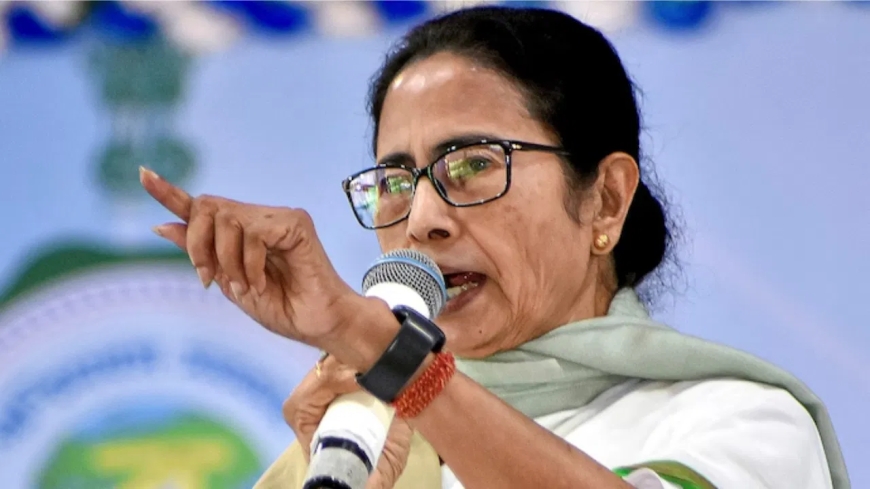
The 2026 West Bengal Assembly elections have delivered one of the most dramatic political shifts in recent Indian history. Mamata Banerjee, long seen as an unbeatable force in Bengal politics, has lost both power and her stronghold. The Bharatiya Janata Party (BJP), once dismissed by her as an “outsider”, has now managed to break through what was considered an impenetrable fortress.
For over a decade, Mamata Banerjee symbolised resistance, resilience, and regional pride. Known affectionately as “Didi,” she built her identity as a grassroots leader who challenged both the Left Front and the Centre. Yet, in 2026, the narrative shifted — not gradually, but decisively.
The Rise of a Fighter in a Male-Dominated Political Arena
Mamata Banerjee’s journey has always stood out in Indian politics. At a time when politics was overwhelmingly male-dominated, she carved a space for herself with sheer determination and relentless activism.
Born in Kolkata in 1955, she rose from humble beginnings. Her early struggles, including personal loss and financial challenges, shaped her political personality — combative, emotional, and deeply connected to the masses.
She entered politics through the Congress in the 1970s and quickly gained recognition. Her victory over veteran leader Somnath Chatterjee in 1984 marked her arrival on the national stage.
Her defining moment came in 1997 when she broke away from Congress to form the All India Trinamool Congress. This move changed Bengal politics forever.
The 2011 Revolution: Ending Left Front Rule
Mamata Banerjee’s biggest political victory came in 2011 when she ended the 34-year rule of the Left Front — one of the longest-running elected communist governments in the world.
Her campaigns around Singur and Nandigram turned her into a symbol of resistance. She positioned herself as the voice of farmers, the poor, and the marginalised.
From 2011 onwards, she dominated Bengal politics, winning three consecutive terms and keeping both the Left and BJP at bay.
2026 Elections: A Turning Point
The 2026 elections were not just another contest — they were a referendum on governance, identity, and political fatigue.
Despite running a high-energy campaign, Mamata Banerjee faced an equally aggressive challenge from the BJP. The party deployed top leadership, resources, and a refined strategy that focused on local identity rather than outsider perception.
Her loss in Bhabanipur to Suvendu Adhikari — once her close aide — symbolised a deeper political shift.
Anti-Incumbency: The Silent Force
After more than 15 years in power, anti-incumbency began to take its toll. While Mamata Banerjee remained personally popular, dissatisfaction with governance grew steadily.
Key concerns included:
- Allegations of corruption
- Law and order issues
- Limited industrial growth
- Economic stagnation in urban areas
These issues gradually eroded trust, especially among urban voters and the middle class.
BJP’s Strategic Transformation
The BJP’s victory was not accidental — it was strategic. After its 2021 defeat, the party recalibrated its approach in Bengal.
Instead of relying on national narratives, it focused on localisation:
- Cultural slogans like “Joy Ma Kali” and “Joy Ma Durga”
- Strong booth-level management
- Targeted outreach to women and migrant workers
This shift helped the BJP shed its “outsider” image and connect with local sentiments.
Vote Polarisation and Social Shifts
Another key factor was the changing voting pattern across communities.
The TMC’s reliance on minority consolidation triggered a counter-polarisation among Hindu voters. At the same time, sections of Muslim voters shifted towards smaller parties, weakening TMC’s traditional base.
This dual shift created a vacuum that the BJP successfully filled.
Welfare vs Governance Debate
Mamata Banerjee’s government had strong welfare schemes, including direct benefit programs like Lakshmir Bhandar. However, the election showed that welfare alone was not enough.
Voters increasingly prioritised:
- Employment opportunities
- Economic growth
- Law and order
The BJP capitalised on this by promising improved governance alongside welfare benefits.
Organisational Weakness of TMC
One of the biggest revelations of the election was the structural weakness within the TMC.
The party relied heavily on Mamata Banerjee’s personal appeal rather than building a strong organisational framework. When public sentiment shifted, the party lacked the depth to counter it effectively.
Political analysts pointed out that this over-dependence became a major vulnerability.
The Role of Suvendu Adhikari
The victory of Suvendu Adhikari over Mamata Banerjee in Bhabanipur carried symbolic weight.
Once a trusted aide, his switch to the BJP and subsequent victory highlighted:
- Internal fractures within TMC
- BJP’s ability to attract strong local leaders
- The erosion of Mamata’s inner political circle
What Lies Ahead for Mamata Banerjee?
Despite the defeat, Mamata Banerjee has not signalled retreat. Known for her resilience, she has already promised a political comeback.
Her statement calling the results “immoral” and alleging irregularities indicates that the political battle is far from over.
Given her track record, it would be premature to write her off. Bengal politics has always been dynamic, and comebacks are not uncommon.
Final Analysis: A Shift Beyond One Leader
The 2026 Bengal election is not just about Mamata Banerjee’s loss — it marks a broader political transformation.
It reflects:
- The power of strategic campaigning
- The limits of personality-driven politics
- The impact of long-term governance fatigue
For the BJP, this victory is historic — its first time leading Bengal. For Mamata Banerjee, it is a moment of reckoning.
But in Indian politics, especially in a state as politically vibrant as West Bengal, one truth remains constant: no defeat is ever final.