









Cockroach Janta Party X Handle Withheld In India, Founder Launches ‘Cockroach Is Back’ Amid Massive Online Buzz
Cockroach Janta Party’s X account has been withheld in India after a legal demand. Founder Abhijeet Dipke launches a new account titled “Cockroach Is Back,” sparking fresh debate over meme politics, satire, censorship, and internet freedom in India.
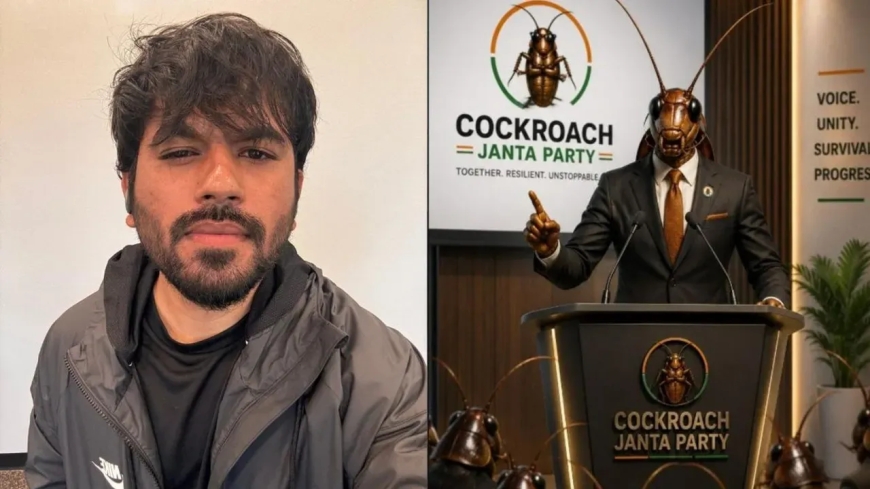
The viral satirical movement known as the Cockroach Janta Party (CJP) has landed at the centre of a major digital controversy after its official X account was withheld in India following a legal demand. What started as an internet meme movement has now turned into a wider national debate around political satire, youth frustration, internet freedom, and the growing power of meme culture in India.
Soon after the account restriction, the movement’s founder Abhijeet Dipke confirmed the development online and announced the launch of a new account titled “Cockroach Is Back.” The comeback post quickly went viral after it sarcastically stated, “You thought you can get rid of us? Lol.”
Within minutes, screenshots of the post flooded social media platforms, reigniting conversations around censorship, political humour, and the internet’s ability to turn satire into a movement.
How Cockroach Janta Party Started
The Cockroach Janta Party emerged earlier this month as a satirical online campaign created largely by young internet users frustrated with unemployment, political narratives, and social media discourse in the country. The movement was founded by Abhijeet Dipke, a former political strategist associated with the Aam Aadmi Party (AAP).
The movement gained momentum after controversy erupted around remarks linked to Chief Justice of India Surya Kant during a court hearing held on May 15. According to reports circulating online, the CJI had allegedly compared some unemployed youth and social media users to “cockroaches” and “parasites” while speaking about people entering professions using fake degrees.
The alleged comments quickly triggered backlash online. Many young users, already frustrated with unemployment issues, examination controversies, and economic pressure, began reacting strongly across social media.
Although Justice Surya Kant later clarified that his comments were being misrepresented and specifically referred to people using fake and bogus degrees, the internet had already transformed the controversy into a viral movement.
From Meme Page To Viral Political Movement
What initially appeared to be a simple satire page rapidly evolved into one of India’s biggest online political trends. The movement mixed memes, sarcastic campaign slogans, fake election promises, and humorous manifestos to criticise politics, governance, and social issues.
The Cockroach Janta Party described itself as “a political party for the lazy, the unemployed, and the chronically correct,” while its fictional headquarters were jokingly listed as “wherever the WiFi works.”
The humour-heavy branding instantly connected with Gen Z and millennial users who began widely sharing its content on Instagram, X, Reddit, and WhatsApp groups.
Within days, the movement reportedly crossed massive follower milestones. Founder Abhijeet Dipke claimed the party gained more than 40,000 members within just two days of launch. On Instagram, the movement reportedly crossed over 14 million followers, making it one of the fastest-growing satire-based political communities online.
X Account Withheld In India
The controversy intensified after users noticed that the official X account of Cockroach Janta Party had been withheld in India.
A notification displayed by X stated that the restriction had been imposed in response to a legal demand. Soon after, founder Abhijeet Dipke publicly confirmed the suspension.
“As expected Cockroach Janta Party’s account has been withheld in India,” he posted online.
He further claimed that the account had crossed more than 200,000 followers within four days before being restricted.
Dipke also alleged that attempts had been made to hack the movement’s Instagram account, although there has been no official confirmation regarding those claims so far.
Only hours after the suspension, Dipke launched a new X handle named “Cockroach Is Back,” signalling that the movement had no plans of disappearing anytime soon.
Why Young Indians Connected With The Movement
One of the biggest reasons behind the rapid rise of Cockroach Janta Party was its relatability among younger audiences.
The movement cleverly used humour to highlight genuine frustrations faced by many Indians today — unemployment, rising competition, examination stress, political polarisation, and lack of opportunities.
The internet quickly reclaimed the word “cockroach,” initially seen as an insult, and transformed it into a symbol of sarcastic resistance.
Memes began portraying “cockroaches” as ordinary citizens struggling to survive difficult economic and social conditions. Users started sharing parody posters, fake membership cards, humorous speeches, and satirical political slogans in support of the movement.
Unlike traditional political campaigns, meme culture spreads almost instantly. Short videos, screenshots, jokes, and sarcastic posts allowed the movement to reach millions within a very short period.
Satirical Manifesto That Went Viral
The movement’s satirical manifesto became one of its most discussed features online.
Although written humorously, many users pointed out that the demands reflected genuine political concerns faced by the country.
Among the widely shared demands were a ban on post-retirement Rajya Sabha seats for Chief Justices, twenty-year election bans for MLAs and MPs who switch parties, and fifty percent reservation for women in Parliament and Union Cabinet positions.
The manifesto successfully blended comedy with criticism, making it stand out from ordinary meme pages. For many young users, it represented frustration disguised as humour.
Politicians And Activists React To The Trend
The movement soon started attracting attention beyond meme creators and social media influencers.
Several politicians, activists, and public figures either interacted with the movement online or publicly commented on it. Among the notable names associated with the discussions were Mahua Moitra, Kirti Azad, Prashant Bhushan, and Anjali Bharadwaj.
The involvement of well-known personalities added more visibility to the movement and pushed it further into mainstream political discussions.
Observers noted that the incident highlighted how internet satire is increasingly becoming an important part of political expression in modern India.
Debate Around Free Speech And Online Restrictions
The withholding of the X account also sparked fresh debates around online censorship and freedom of speech.
Supporters of the movement argued that satire and political humour are essential components of democratic expression. Many questioned whether meme-based criticism should face legal restrictions.
Others pointed out that social media platforms like X are legally required to comply with government requests and local laws.
X has not publicly disclosed the exact legal grounds behind the restriction. Usually, such account withholdings happen when platforms receive legal notices under local regulations.
Under X’s policies, withheld accounts generally remain visible globally while becoming inaccessible inside the country where the legal demand originated.
Rise Of Meme Politics In India
The Cockroach Janta Party phenomenon also reflects a much larger transformation happening in Indian politics — the rise of meme politics.
Earlier, political communication depended heavily on television debates, newspaper editorials, rallies, and speeches. Today, memes, parody videos, sarcastic reels, and viral hashtags shape political discussions faster than traditional campaigns.
Young internet users increasingly use humour not just for entertainment, but also as a way to express anger, frustration, criticism, and political participation.
Digital satire has become one of the strongest forms of online engagement because it feels relatable, fast, and easily shareable.
The Cockroach Janta Party became one of the clearest examples of how quickly internet humour can evolve into a nationwide political conversation.
What Happens Next?
For now, the Cockroach Janta Party appears determined to continue its online presence despite restrictions.
Its newly launched X handle has already resumed posting memes, satire, and political commentary. Supporters continue sharing “cockroach”-themed content across platforms, while critics debate whether the trend represents meaningful protest or simply temporary internet humour.
Regardless of how long the movement survives, it has already succeeded in showing the immense power of internet culture in shaping modern political conversations.
In the age of viral content and meme-driven communication, even a sarcastic online joke can transform into a full-fledged political movement.