












US May Not Support India in War With Pakistan: Key Details Explained
US signals it may not fully support India in conflict with Pakistan, stressing national interests and regional stability over alliances.
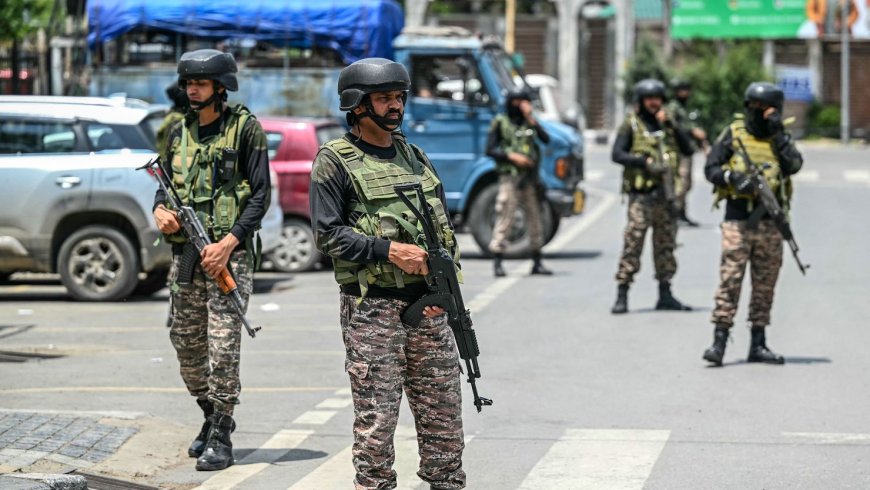
A recent report has stirred debate in strategic circles, suggesting that the United States has conveyed to India that it may not offer unconditional support in the event of a conflict with Pakistan. The message, according to reports, highlights that Washington’s decisions will be guided primarily by its own national interests rather than alliance expectations.
This development has once again raised questions about global partnerships and India’s long-term defence strategy.
US Stresses ‘National Interest First’ Approach
Officials reportedly indicated that any US response in a conflict scenario would depend on its own strategic priorities.
Even though India is a key partner in the Indo-Pacific, unconditional military backing is not guaranteed.
Strategic Partnership Has Its Limits
The United States and India share strong ties in trade, defence, and geopolitics.
However, this report suggests that the partnership may not translate into automatic support during military conflicts.
Focus on Regional Stability Over Sides
The US is said to prioritise maintaining regional stability and a rules-based international order.
This means it may push for de-escalation instead of taking sides in a conflict.
Reference to Past India-Pakistan Tensions
Analysts often refer to previous conflicts, including the 2019 India-Pakistan tensions, to highlight US neutrality.
Such instances have shaped perceptions about Washington’s stance in South Asian conflicts.
Debate Over Defence Partnerships
This development has reignited discussions about India’s defence collaborations.
India has historically worked closely with countries like France and Russia for defence procurement and technology.
Role of US-Pakistan Military Links
The US has long maintained defence ties with Pakistan, including supply of military equipment like F-16 aircraft.
These ties often complicate the geopolitical balance in the region.
Indo-Pacific Strategy Still Important
Despite this stance, India remains central to US strategy in the Indo-Pacific region, especially in balancing the influence of China.
However, this cooperation may be limited to broader geopolitical goals.
India’s Independent Foreign Policy
India has increasingly focused on maintaining strategic autonomy.
It engages with multiple global powers rather than relying on a single ally for security.
Pakistan’s Role in Regional Diplomacy
Pakistan continues to play a role in regional diplomacy, especially in conflict mediation efforts in West Asia.
This adds another layer of complexity to US decision-making.
Analysts Warn Against Overdependence
Experts suggest that India should not depend entirely on any one country for military or diplomatic support.
Instead, a diversified approach is seen as more practical.
Reality of Modern Geopolitics
Modern international relations are driven by national interests rather than fixed alliances.
Countries often take flexible positions depending on the situation.
What It Means for India
For India, the key takeaway is the importance of self-reliance in defence and diplomacy.
Strengthening domestic capabilities and maintaining balanced global relations will remain crucial.