










UPI Charges After Diwali 2026: Who Pays the ₹2,000+ Fee?
NPCI has postponed the proposed UPI merchant fee until after Diwali. Find out who will pay, which transactions remain free and what customers need to know.
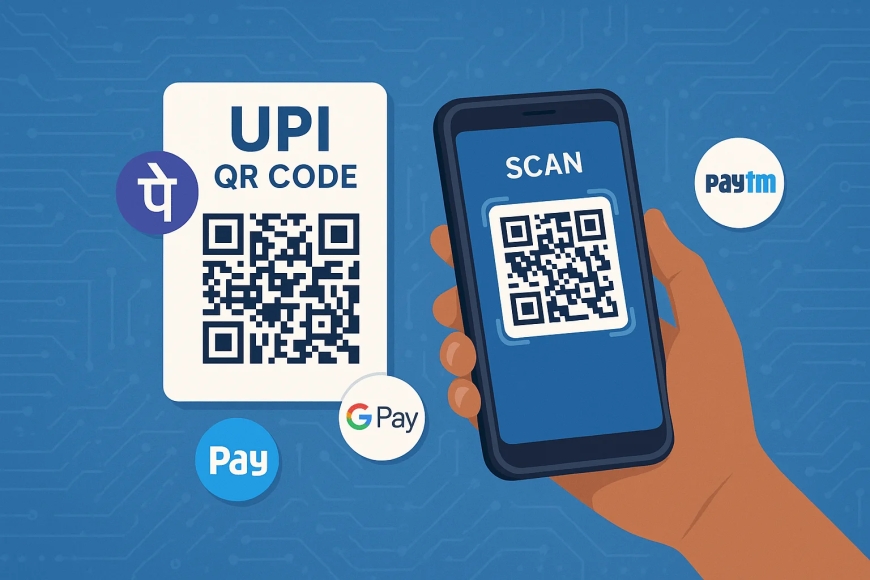
Millions of Indians use the Unified Payments Interface (UPI) every day to pay at shops, restaurants, supermarkets, petrol stations and online stores. Now, a proposed change to UPI merchant transaction charges has attracted attention after the National Payments Corporation of India (NPCI) postponed its implementation until after Diwali.
The change was originally scheduled to take effect on October 15, 2026. However, on October 13, NPCI announced that the Merchant Discount Rate (MDR) on selected person-to-merchant UPI transactions would be implemented immediately after Diwali, on a date to be notified separately.
The key question for customers is simple: Will people have to pay an extra charge when making UPI payments above ₹2,000?
Under the announced framework, the MDR is intended to be paid by eligible merchants, not customers. Ordinary person-to-person UPI transfers will remain free, regardless of the amount transferred. Payments to merchants up to ₹2,000 and transactions covered by the zero-MDR framework for small merchants will also remain free.
Here is what customers, shopkeepers and online businesses should know about the proposed change.
1. What Is the Latest Update on UPI Charges?
NPCI has postponed the rollout of the proposed merchant discount rate on selected UPI transactions until after Diwali 2026.
The original implementation date was October 15. The revised announcement says the fee will be introduced immediately after Diwali, but the exact date has not yet been notified.
The decision comes during the festive shopping season, when consumers typically make more purchases and businesses receive higher volumes of digital payments.
The postponement gives merchants and payment service providers additional time before the revised framework takes effect. Until an updated implementation date is formally announced, customers and businesses should avoid assuming that the fee will begin on a particular day.
It is also important to understand that this is a merchant-fee framework, not a general charge on every UPI payment.
2. Will Customers Pay Extra for UPI Transactions Above ₹2,000?
Under the announced framework, customers are not supposed to pay the MDR.
The fee is designed for eligible person-to-merchant transactions, where a customer pays a business. Banks have been advised to ensure that merchants do not pass the MDR on to customers, and UPI application providers are prohibited from imposing platform fees or hidden charges under the announced framework.
For example, if an eligible merchant receives a payment of ₹10,000, the standard proposed MDR of 0.4% would amount to ₹40, subject to the applicable rules and any category-specific exception.
That amount is intended to be borne by the merchant rather than added to the customer's UPI payment.
Customers should still check their payment confirmation and report any unexplained extra charge through the appropriate payment app or bank channel.
3. Which UPI Transactions Will Remain Free?
The framework preserves free UPI usage for several important transaction categories.
| Transaction type | Proposed treatment |
|---|---|
| Person-to-person transfers | Free, regardless of amount |
| Merchant payments up to ₹2,000 | Free of MDR |
| Eligible small merchants under the zero-MDR framework | Exempt from MDR |
| Selected merchant payments above ₹2,000 | Proposed MDR may apply |
| Eligible payments in specified sectors | Special rates may apply |
Person-to-person transfers include sending money to a friend or family member. These transactions are distinct from payments made to businesses.
For example, transferring ₹10,000 to a family member will remain free under the announced framework. Paying an eligible merchant ₹10,000 falls under a different category and may attract MDR once the revised framework takes effect.
The amount alone does not determine whether the fee applies. The type of transaction and the merchant's applicable category are also important.
4. What Is MDR and Why Is It Being Introduced?
MDR stands for Merchant Discount Rate. It is a fee associated with accepting digital payments, generally paid by a merchant to the payment ecosystem participants involved in processing a transaction.
These participants can include banks, payment service providers and UPI application providers.
Under the announced UPI framework, the standard MDR for selected merchant transactions above ₹2,000 is 0.4%, subject to applicable caps and exceptions. For transactions of ₹75,000 and above, the standard MDR is capped at ₹300 per transaction.
The stated purpose of the framework is to support the sustainability and continued expansion of digital payment infrastructure.
MDR is not a government tax. It is a charge within the merchant payment ecosystem, with revenue distributed among participating service providers under the applicable arrangements.
5. How Much Will the Proposed UPI Merchant Fee Be?
The amount depends on the transaction value and the category in which it falls.
For standard eligible merchant transactions, the announced rate is 0.4%.
| Payment amount | Illustrative MDR at 0.4% |
|---|---|
| ₹2,000 | No MDR under the announced threshold |
| ₹2,500 | ₹10 |
| ₹5,000 | ₹20 |
| ₹10,000 | ₹40 |
| ₹20,000 | ₹80 |
| ₹75,000 | ₹300, subject to the cap |
These are illustrative calculations, not a guarantee that every payment of the listed amount will attract the standard rate. Small merchants, specified sectors and other exempt or specially treated categories may be governed by different rules.
The actual charge will depend on the transaction type and the applicable framework when implementation begins.
6. Will Small Shopkeepers and Street Vendors Pay the Fee?
Eligible small merchants are protected under the zero-MDR framework.
The announced framework specifies that small merchants, including street vendors and neighbourhood businesses receiving up to ₹1 lakh per month through UPI QR codes under the relevant person-to-person-merchant category, will continue to receive zero-MDR treatment on all transactions covered by that category.
This is an important distinction because a small local shop and a larger merchant may be treated differently even when both accept UPI payments.
Customers should not assume that every shop will face the same fee merely because a payment exceeds ₹2,000. The merchant's category and eligibility matter.
7. Are There Special UPI Rates for Certain Sectors?
Yes. The announced framework provides special treatment for selected sectors.
Transactions above ₹2,000 in specified essential and thin-margin sectors—including railways, telecommunications, insurance, fuel and agricultural inputs—are assigned a flat MDR of ₹5 per transaction under the announced framework.
Payments relating to mutual funds, securities, stockbrokers and dealers have a separate proposed rate of 0.02%, capped at ₹300 per transaction.
These exceptions mean the standard 0.4% rate should not automatically be applied to every merchant payment above ₹2,000.
The applicable category, transaction purpose and final implementation instructions will determine which rate applies.
8. Will PhonePe, Google Pay or Paytm Start Charging Customers?
The proposed MDR framework does not mean that every customer using PhonePe, Google Pay, Paytm or another UPI application will automatically be charged for payments above ₹2,000.
The framework distinguishes between merchant payments and person-to-person transfers. It also states that customers should not bear the MDR and that UPI application providers are prohibited from imposing platform fees or hidden charges under the announced rules.
Customers should continue to check the amount shown on the payment screen before confirming a transaction. If an app displays an unexplained fee, users should review the payment details and contact the provider or bank through its official support channel.
The announced change concerns the merchant payment ecosystem; it should not be interpreted as a blanket fee on all UPI users.
9. Why Was the Implementation Postponed Until After Diwali?
The postponement was announced with the festive season in mind.
Diwali is an important period for retail spending in India. Shops, online sellers, restaurants, travel businesses and other merchants typically prepare for increased customer activity around the festival.
Introducing a new payment-cost framework immediately before the peak shopping period could create confusion for businesses and consumers.
The delay allows the payment ecosystem more time before the revised charges are introduced. However, the announcement does not establish a new calendar date, so the exact implementation schedule remains to be notified separately.
Businesses should therefore follow formal updates rather than relying on rumours about a specific start date.
10. What Should Customers and Merchants Do Now?
For customers, there is no need to stop using UPI or avoid payments above ₹2,000 simply because of this announcement.
Continue checking the amount displayed before confirming a payment. Remember that person-to-person transfers remain free and that the proposed MDR is intended for eligible merchant transactions rather than customers.
For merchants, the important steps are to confirm their payment category, understand whether the zero-MDR exemption applies, and check the final rules when the implementation date is announced.
Businesses should also review payment-provider communications and update their accounting procedures if necessary.
Neither customers nor merchants should rely solely on viral messages claiming that every UPI payment will attract a fee.
Final Thoughts
The proposed UPI merchant fee has been postponed until after Diwali 2026, with the exact implementation date still to be announced. The change is not a blanket charge on all UPI transactions.
Under the announced framework, selected merchant payments above ₹2,000 may attract MDR, generally at 0.4% and subject to the applicable cap and special-category rates. Eligible small merchants remain protected under the zero-MDR framework, and person-to-person UPI transfers will continue to be free.
Most importantly, customers are not supposed to pay the MDR. The announced framework directs banks to prevent merchants from passing the fee on to customers and prohibits UPI application providers from imposing platform fees or hidden charges under the framework.
For now, the best approach is to continue using UPI normally, check payment details carefully and wait for the formal implementation date and final instructions.
Frequently Asked Questions (FAQs)
1. When will the new UPI merchant fee start?
NPCI has postponed implementation until immediately after Diwali 2026. The exact date will be notified separately.
2. Will customers pay a fee for UPI payments above ₹2,000?
Under the announced framework, MDR is intended to be paid by eligible merchants, not customers. Banks have been advised to ensure that the fee is not passed on to customers.
3. Will sending money to friends or family remain free?
Yes. Person-to-person UPI transfers remain free regardless of the amount transferred.
4. What is the proposed MDR rate for eligible merchant payments?
The standard proposed rate is 0.4% on selected merchant transactions above ₹2,000, subject to the applicable cap and category-specific exceptions.
5. Will small shopkeepers be charged MDR?
Eligible small merchants covered by the zero-MDR framework will remain exempt. Their category and eligibility conditions matter.
6. Will every payment above ₹2,000 attract the same rate?
No. The applicable treatment depends on whether the transaction is person-to-person or person-to-merchant, the merchant's category and any sector-specific exception.
7. Is MDR a government tax?
No. MDR is a fee within the merchant payment ecosystem and is distributed among participating payment service providers under the applicable arrangements.
8. Will PhonePe and Google Pay start charging every user?
The announced framework does not introduce a blanket charge on every user. It concerns selected merchant transactions, while person-to-person transfers remain free.
9. Why was the UPI fee postponed?
NPCI cited the festive season and deferred implementation until after Diwali. A revised date is still to be announced.
10. Should customers stop using UPI until the new date is announced?
No. Customers can continue using UPI normally. They should verify payment amounts and report any unexplained charges through the appropriate support channels.