











NEET Paper Leak Solution: Nandan Nilekani’s New Exam Proposal
Nandan Nilekani has proposed generating exam question papers at the last minute to reduce paper leaks. Understand how the idea could work and what it means for NEET aspirants.
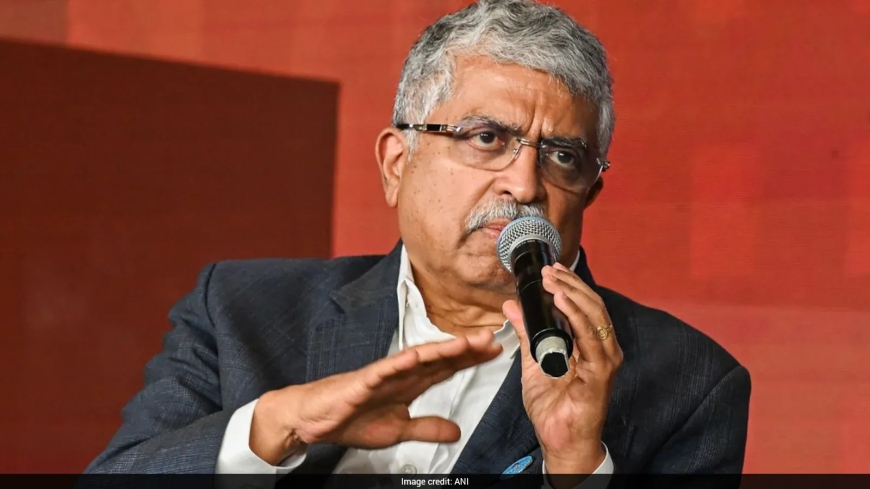
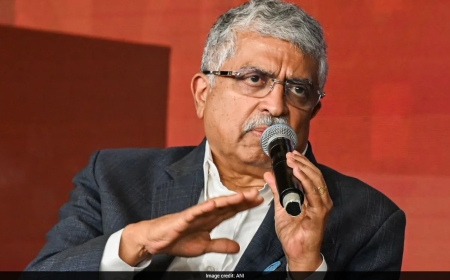
India's competitive examination system could see new approaches to question-paper security following a proposal by technology entrepreneur Nandan Nilekani. The Infosys co-founder has suggested that examinations could use large question banks to generate question papers close to the time of the test, reducing the period during which a complete paper exists in a fixed, accessible form.
The proposal has attracted attention because paper leaks and examination irregularities can affect thousands of students, particularly those preparing for high-stakes entrance tests such as the National Eligibility-cum-Entrance Test (NEET).
For medical aspirants, a secure examination system is essential. Students spend months or years preparing for entrance tests, and any compromise in question-paper confidentiality can damage confidence in the fairness of the process.
However, Nilekani's suggestion should be understood as a proposed approach to examination reform, not an officially implemented change to NEET. The idea raises important questions about how technology, security procedures and examination administration could work together to protect the integrity of competitive exams.
1. What Has Nandan Nilekani Proposed?
Nandan Nilekani has suggested using a large bank of examination questions and generating the final question paper close to the time of the examination.
Under this approach, exam authorities would maintain a secure collection of questions covering the prescribed syllabus and difficulty levels. A system could select questions from that bank to assemble a paper shortly before the examination begins.
The central idea is to reduce the period during which a single, finalised question paper is available for potential theft or unauthorised sharing.
Instead of preparing one fixed paper far in advance, the examination system could use controlled digital processes to create the paper nearer to the test.
The approach would require careful design, secure access controls, quality checks and safeguards to ensure that every candidate receives a fair examination.
2. Why Is Question-Paper Security a Major Concern in India?
Competitive examinations often determine admission to universities, professional courses and government positions. As a result, the consequences of a paper leak can extend far beyond a single examination centre.
Students who prepare honestly may feel disadvantaged if some candidates gain unauthorised access to examination material. Authorities may also face difficult decisions about cancellations, re-examinations, investigations and result delays.
Paper leaks can create additional financial and emotional pressure for families. Students may have to repeat preparation cycles, postpone admissions or rearrange plans for education and employment.
The challenge is not limited to protecting a document. Examination security also depends on the people, institutions, technology and procedures involved in creating, distributing and administering the paper.
This is why reforms need to address the entire examination process rather than relying on a single technical solution.
3. How Could Last-Minute Question-Paper Generation Work?
A question bank is a collection of questions prepared and reviewed before an examination. Each question can be tagged according to the syllabus, subject, topic, difficulty level and other relevant criteria.
A secure system could use those tags to select a balanced set of questions when the paper is generated.
For example, an examination authority could specify how many questions should come from physics, chemistry and biology, along with the required distribution of topics and difficulty levels.
The system would then assemble a paper that meets those specifications. The final paper could be generated shortly before the examination and delivered through a controlled process.
Several safeguards would be necessary:
-
Secure question storage: Only authorised personnel should be able to access the question bank.
-
Restricted permissions: Staff should receive access only to the information required for their roles.
-
Auditable selection: The system should maintain records of when questions are selected and who is authorised to access them.
-
Balanced difficulty: Different papers or sets must meet consistent academic standards.
-
Technical resilience: Systems should be tested against outages, unauthorised access and other failures.
-
Independent review: Examination experts should verify the process and its fairness.
Last-minute generation may reduce certain risks, but its effectiveness would depend on how the entire system is designed and managed.
4. Could This Method Prevent NEET Paper Leaks?
It could help reduce some opportunities for leaks, but it would not guarantee that paper leaks become impossible.
A question bank contains examination material before the final paper is assembled. If the bank itself is compromised, unauthorised individuals could potentially obtain questions.
The system could also face risks involving insider access, software vulnerabilities, poor administration or unauthorised disclosure after the paper is generated.
A strong model would therefore require multiple layers of protection. These could include encryption, restricted access, staff verification, secure infrastructure, monitoring, independent audits and clear accountability.
It would also be important to investigate any suspicious activity promptly and establish transparent procedures for responding to a confirmed breach.
The goal should be to make examination fraud harder to carry out, easier to detect and less likely to undermine the fairness of the test.
5. What Role Could Computer-Based Testing Play?
Computer-based testing is another possible part of examination reform. In such systems, candidates answer questions on computers at designated test centres rather than receiving a traditional printed paper.
Depending on the design, secure digital delivery could reduce the need to transport and store large quantities of printed question papers.
However, moving an examination online does not automatically make it secure. Digital examinations can face cybersecurity threats, technical failures, identity-verification problems and differences in infrastructure between test centres.
Authorities would also need to ensure that students have equitable access to examination centres and that systems can handle large numbers of candidates at the same time.
For a national examination such as NEET, any major shift in format would require detailed planning, testing and clear communication well in advance.
6. What Would This Mean for NEET Aspirants?
At present, students should not change their preparation strategy based solely on Nilekani's proposal.
The proposal does not itself change the NEET syllabus, eligibility requirements, examination pattern, marking scheme or official examination schedule.
Candidates should continue preparing according to the latest official examination bulletin and syllabus issued by the relevant authority.
Students should also be cautious about social media posts claiming that NEET will immediately move to a new examination format or that last-minute paper generation has already been adopted.
Any confirmed change to the examination process would need to be communicated through official announcements.
For aspirants, the most practical approach is to focus on preparation while relying on verified updates for information about the exam.
7. What Challenges Would Authorities Need to Solve?
Implementing a system that generates question papers close to examination time would involve several technical and administrative challenges.
Maintaining consistent difficulty
Questions selected from a large bank must provide a fair and comparable assessment. If different candidates receive papers with significantly different difficulty levels, results may become harder to compare.
Creating a high-quality question bank
The bank would need enough questions to cover the syllabus properly without repeating questions excessively or leaving gaps in important topics.
Protecting the system
The question bank and paper-generation software would require strong cybersecurity protections. Access logs, independent audits and secure operational procedures would be important.
Managing large-scale delivery
A national examination involves many candidates, centres and staff members. The final paper would need to reach the right locations at the right time without creating confusion or delays.
Providing accountability
Authorities would need clear procedures for reviewing suspected breaches, correcting errors and responding to technical failures.
These challenges do not make the proposal unworkable, but they show why a technical idea must be supported by strong administration and testing.
8. Could This Approach Be Used in Other Competitive Examinations?
The underlying idea could be relevant to other high-stakes examinations that rely on confidential question papers.
Depending on their requirements, examination authorities could explore question banks and controlled paper generation for recruitment tests, university entrance examinations and other assessments.
However, different examinations have different syllabuses, candidate numbers, marking systems and operational constraints. A method suitable for one test may not be appropriate for another without modifications.
Any wider adoption would need to consider academic quality, security, fairness, costs and the readiness of the institutions responsible for administering the examinations.
The proposal therefore opens a broader discussion about how examination systems can use technology while maintaining public trust.
Final Thoughts
Nandan Nilekani's proposal to generate question papers close to examination time highlights a possible way to reduce the risk of examination-paper leaks in India.
Using a large question bank and assembling the final paper shortly before a test could reduce the period during which a single completed paper is available. However, the approach would still need strong cybersecurity, restricted access, consistent difficulty standards and reliable examination administration.
Most importantly, the proposal is not itself a confirmed change to NEET. Students should continue following official instructions and preparing according to the currently applicable syllabus and examination rules.
The wider lesson is that protecting competitive examinations requires a combination of technology, transparency, accountability and well-designed procedures. Any reform should be judged by whether it makes examinations more secure while preserving fairness for every candidate.
Frequently Asked Questions (FAQs)
1. What did Nandan Nilekani propose for competitive examinations?
He proposed an approach in which a large question bank could be used to generate the final examination paper close to the time of the test, potentially reducing the window for paper leaks.
2. Has NEET officially adopted last-minute question-paper generation?
The proposal should not be treated as an implemented NEET rule. Students should wait for official announcements before assuming that the examination process has changed.
3. How could last-minute paper generation reduce leaks?
It could reduce the time a complete final paper is available in advance. However, it would not eliminate risks involving question-bank access, insiders or technical vulnerabilities.
4. Would the NEET syllabus change under this proposal?
The proposal itself does not change the syllabus, eligibility requirements, marking scheme or examination schedule.
5. Can computer-based examinations prevent paper leaks completely?
No. Computer-based examinations can reduce some risks associated with printed papers, but they also require strong cybersecurity, reliable infrastructure and secure delivery systems.
6. What is a question bank?
A question bank is a structured collection of examination questions organised by topics, syllabus coverage and other criteria. Examination authorities can use it to assemble one or more test papers.
7. Could the same approach be used for government recruitment examinations?
Potentially, yes. Its suitability would depend on the examination's requirements, technical infrastructure, question-bank quality and security procedures.
8. What should NEET aspirants do now?
Students should continue preparing according to the latest official syllabus and examination bulletin. They should rely on confirmed announcements rather than unverified claims about proposed reforms.