













India Semiconductor Mission 2047: Chip Self-Reliance Explained
Discover why semiconductor manufacturing matters for India by 2047, including chip imports, domestic fabrication, electronics, AI, defence and future jobs.
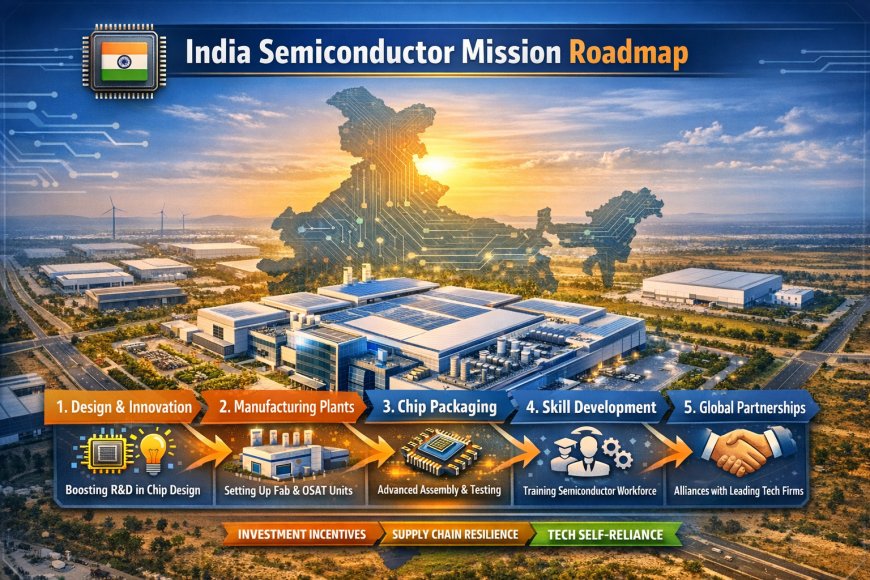
India's ambition to become a major technology and manufacturing economy by 2047 depends partly on a component most consumers rarely see: the semiconductor chip. These tiny electronic components power smartphones, cars, computers, telecommunications networks, medical equipment, defence systems and artificial intelligence infrastructure.
As demand for electronics and digital services increases, building a stronger domestic semiconductor industry has become an important economic and strategic priority for India.
The India Semiconductor Mission 2047 reflects the broader goal of strengthening the country's semiconductor ecosystem over the coming decades. The objective is not simply to manufacture more chips. India also needs skilled workers, advanced research facilities, reliable supply chains, semiconductor design capabilities and companies that can compete internationally.
For businesses, students and technology professionals, the expansion of this industry could create new opportunities. However, semiconductor self-reliance will require sustained investment, technological development and cooperation between government, industry and educational institutions.
1. What Is the India Semiconductor Mission?
The India Semiconductor Mission is a government initiative designed to support the development of India's semiconductor and display manufacturing ecosystem.
The programme supports investment in semiconductor fabrication facilities, display manufacturing, compound semiconductors, semiconductor packaging and related technologies through approved policy frameworks.
The broader objective is to reduce supply-chain vulnerabilities, encourage domestic manufacturing and help India become a more important participant in the global electronics industry.
Semiconductor manufacturing is complex. A single chip can require sophisticated design software, specialised materials, precision equipment, clean-room facilities and highly controlled production processes.
Consequently, developing the industry requires more than establishing factories. India must also strengthen the supporting ecosystem, including suppliers, research institutions, testing facilities and specialised training programmes.
2. Why Is Semiconductor Self-Reliance Important for India?
Semiconductors are essential to modern economic activity. Their importance extends from consumer electronics to critical infrastructure.
Reducing supply-chain vulnerability
When a country relies heavily on imported chips, disruptions in international supply chains can affect domestic manufacturers.
Geopolitical tensions, natural disasters, production bottlenecks and trade restrictions can influence the availability and cost of semiconductor components.
Developing domestic manufacturing capacity could give Indian businesses additional supply options and improve resilience. However, complete independence from imports is difficult because semiconductor production depends on globally distributed technologies and materials.
Supporting electronics manufacturing
India manufactures a growing range of electronic products, including mobile phones, telecommunications equipment and industrial electronics.
A stronger local semiconductor ecosystem could help manufacturers access selected chip components and related services within India.
This would not eliminate the need for imports, particularly for advanced chips, but it could strengthen parts of the domestic value chain.
Improving strategic resilience
Semiconductors are used in defence electronics, satellites, secure communications, radar systems and other strategically important technologies.
Greater domestic capability in selected semiconductor technologies could support supply security and reduce dependence on external suppliers for critical components.
Strengthening technological capability
Semiconductor design and manufacturing require expertise in materials science, electrical engineering, computer architecture, physics and advanced production systems.
Investment in the industry can encourage research, specialist training and collaboration between universities and businesses.
3. Where Does India Stand in Semiconductor Manufacturing?
India has established a strong presence in semiconductor design, particularly through engineering and research teams working for global technology companies.
However, designing a chip and manufacturing it at a semiconductor fabrication plant are different activities.
Chip design involves developing the architecture and functionality of a semiconductor. Fabrication involves producing the physical chip on silicon wafers using specialised equipment and tightly controlled processes.
India has been working to expand its domestic manufacturing and packaging capabilities through government-supported projects and private investment.
The ecosystem includes several important areas:
-
Semiconductor fabrication: Manufacturing integrated circuits on silicon wafers.
-
Assembly, testing, marking and packaging: Preparing chips for use in electronic products.
-
Compound semiconductors: Developing materials used in specialised applications such as power electronics and communications.
-
Chip design: Creating the architecture and layouts used to manufacture integrated circuits.
-
Research and development: Developing new materials, processes and semiconductor technologies.
Progress across these areas will help determine how much value India can capture from the global semiconductor industry.
4. What Is a Semiconductor Fabrication Plant?
A semiconductor fabrication plant, commonly called a fab, is a specialised facility where integrated circuits are manufactured.
The production process involves multiple steps, including wafer preparation, deposition, lithography, etching, doping and inspection. These processes build complex electronic structures onto silicon wafers.
A fab requires highly controlled environmental conditions, reliable electricity, specialised water treatment, advanced machinery and skilled technical personnel.
Building and operating such a facility is expensive, and commercial success depends on production efficiency, technology capability, customer demand and access to supporting suppliers.
India's semiconductor strategy therefore involves developing not only fabrication plants but also the infrastructure and expertise needed to operate them competitively.
5. How Could Semiconductor Manufacturing Support AI?
Artificial intelligence depends on computing infrastructure, and semiconductor chips are at the heart of that infrastructure.
AI systems run on a range of processors, including central processing units, graphics processing units and specialised AI accelerators. These components are used in data centres, research laboratories, smartphones and connected devices.
A stronger semiconductor ecosystem could support India in several ways:
AI research: Domestic expertise in chip design can help researchers develop hardware suited to particular computing needs.
Data-centre infrastructure: Access to a broader range of semiconductor technologies can support investment in cloud computing and AI services.
Edge computing: Efficient chips can enable AI features on smartphones, cameras, vehicles and industrial devices.
Energy efficiency: Semiconductor research can help improve the performance and power consumption of electronic systems.
However, manufacturing advanced AI processors requires highly sophisticated technology. Developing that capability will take time and cannot be achieved through investment alone.
6. What Does Semiconductor Self-Reliance Mean for Defence?
Defence systems use semiconductors in communication equipment, navigation systems, surveillance platforms, radar, aerospace electronics and secure computing.
Access to reliable components is important because supply disruptions can affect maintenance, upgrades and production schedules.
Domestic semiconductor capabilities could help India develop selected components for defence and strategic applications while supporting closer collaboration between research institutions and manufacturers.
Not every defence chip needs to be manufactured domestically for the industry to become more resilient. Priorities may include technologies where supply security, specialised performance or strategic control is especially important.
Developing these capabilities requires rigorous testing, long-term investment and compliance with relevant technical and security standards.
7. How Could the Semiconductor Industry Create Jobs?
The expansion of semiconductor manufacturing can create employment across several stages of the technology value chain.
Potential opportunities include:
-
Semiconductor design and verification.
-
Electrical and electronics engineering.
-
Materials science and chemical engineering.
-
Fab equipment installation and maintenance.
-
Manufacturing process engineering.
-
Quality control and testing.
-
Chip assembly and packaging.
-
Industrial automation and software.
-
Research and development.
-
Supply-chain management and technical operations.
The industry also creates demand for supporting services such as construction, equipment servicing, logistics and specialised utilities.
However, the number and type of jobs will depend on which projects become operational, their scale, the technologies used and the skills available in the workforce.
8. What Challenges Must India Overcome?
India's semiconductor ambitions face several practical challenges.
High capital costs
Fabrication facilities require substantial upfront investment in buildings, equipment and infrastructure. Keeping production competitive also requires continued spending on technology and maintenance.
Access to advanced technology
Leading-edge chip manufacturing relies on specialised equipment, production processes and technical expertise that are concentrated among a limited number of global suppliers.
Skilled workforce
Semiconductor manufacturing requires specialised knowledge in engineering, materials, electronics and clean-room operations. Training enough qualified workers is essential.
Reliable infrastructure
Fabs require dependable electricity, high-quality water, stable logistics and uninterrupted access to critical supplies.
Global competition
Established semiconductor hubs have decades of manufacturing experience, supplier relationships and research expertise. India must develop competitive capabilities rather than relying only on incentives.
Market demand
Factories need customers and sufficient production volumes to operate economically. Manufacturing capacity must be aligned with realistic commercial demand.
Addressing these challenges will be important for turning investment announcements into sustainable industrial capability.
9. What Can Students Do to Build a Career in Semiconductors?
Students interested in this industry can prepare by developing a foundation in science, mathematics, electronics and computing.
Relevant study areas include electrical engineering, electronics and communication engineering, materials science, physics, computer engineering and semiconductor-related research.
Practical skills can also make a difference. Students can explore digital electronics, embedded systems, computer architecture, chip-design tools, verification methods and semiconductor manufacturing concepts.
Institutions that offer laboratories, internships, industry projects and research opportunities can help students understand how semiconductor technology works beyond textbooks.
The field is interdisciplinary, so opportunities are not limited to chip designers. Manufacturing, equipment maintenance, testing, automation, materials research and quality assurance also require specialised professionals.
10. What Could Semiconductor Self-Reliance Look Like by 2047?
India's 2047 technology ambitions provide a long-term framework for strengthening domestic semiconductor capabilities. The actual outcome will depend on investment, research, industrial execution and international partnerships.
Progress could involve:
-
Greater domestic capacity in selected semiconductor manufacturing technologies.
-
More advanced chip-design and verification capabilities.
-
Stronger assembly, testing and packaging operations.
-
Better links between universities, research laboratories and industry.
-
A larger workforce trained in semiconductor engineering.
-
More domestic suppliers for selected materials, equipment and services.
-
Improved resilience for critical electronics supply chains.
These are possible areas of progress rather than guaranteed outcomes. Semiconductor technology changes rapidly, and each stage of development requires commercial viability as well as technical capability.
The long-term objective should be to build a competitive industry that can innovate, manufacture reliably and participate in global supply chains.
Final Thoughts
India's semiconductor ambitions are closely linked to its future in electronics manufacturing, artificial intelligence, telecommunications and strategic technology.
The India Semiconductor Mission provides a policy framework for supporting domestic semiconductor manufacturing and related capabilities. However, achieving greater self-reliance will require more than building factories. India must also develop specialised talent, research capabilities, reliable infrastructure and globally competitive suppliers.
For students, engineers and businesses, the semiconductor sector offers opportunities across design, manufacturing, testing and research. For the country, the challenge is to convert investment into long-term technological capability and sustainable industrial growth.
By 2047, the strength of India's semiconductor ecosystem will depend on how effectively government, industry and educational institutions work together to build expertise and compete internationally.
Frequently Asked Questions (FAQs)
1. What is the India Semiconductor Mission?
It is a government initiative designed to support India's semiconductor and display manufacturing ecosystem, including fabrication, packaging, related technologies and supporting capabilities.
2. Why is semiconductor self-reliance important for India?
It can improve supply-chain resilience, support electronics manufacturing, strengthen strategic capabilities and encourage domestic research and technical expertise.
3. Does semiconductor self-reliance mean India will stop importing chips?
No. Complete independence from global chip supply chains is difficult. The goal is to build stronger domestic capabilities and reduce vulnerabilities in selected areas.
4. What is a semiconductor fab?
A fab is a specialised factory where integrated circuits are manufactured on silicon wafers using complex processes and advanced equipment.
5. How can semiconductor manufacturing support artificial intelligence?
Semiconductors power AI processors, data centres, smartphones and connected devices. Domestic expertise could strengthen chip design and support selected computing technologies.
6. What careers are available in the semiconductor industry?
Career options include chip design, verification, electrical engineering, materials science, manufacturing, testing, equipment maintenance, automation and research.
7. What are the biggest challenges for India's semiconductor industry?
Major challenges include high investment requirements, access to advanced technology, skilled-worker shortages, infrastructure reliability and competition from established semiconductor hubs.
8. Will India become completely self-reliant in semiconductors by 2047?
That outcome cannot be guaranteed. Progress will depend on technological development, investment, skilled talent, commercial demand and the ability to compete in global markets.