











Tesla Flying Car Revealed: New Roadster, Features and Price
Tesla has unveiled its next-generation Roadster with SpaceX-inspired thrusters and dramatic mid-air stunts. Check its features, expected production date, price and limitations.
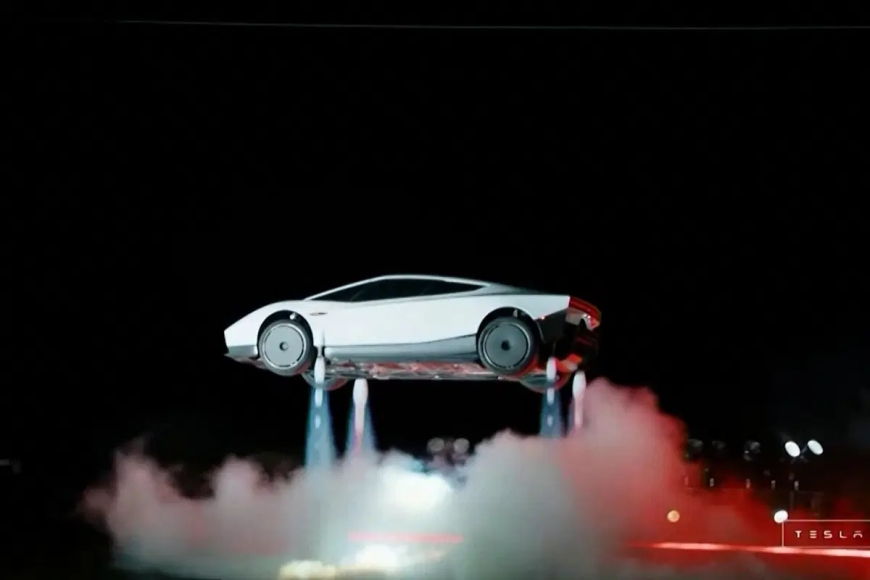
Tesla has captured global attention after unveiling its next-generation Roadster in a dramatic demonstration featuring rocket-style thrusters and mid-air stunts. The presentation, held at a SpaceX facility in Texas on October 15, 2026, showed the electric sports car performing a sequence of unusual manoeuvres that included an aerial flip.
Tesla CEO Elon Musk described the development as evidence that flying cars could become a reality. However, the announcement needs an important clarification: the demonstration does not establish that Tesla has launched a conventional flying car capable of sustained flight like an aircraft.
The showcased vehicle is a next-generation electric sports car incorporating SpaceX-inspired technology. Its proposed thruster system is intended to deliver extraordinary performance and brief airborne manoeuvres. The company has indicated that production is planned for 2028, although the final specifications and availability remain uncertain.
The reveal has renewed interest in the future of electric vehicles, aerospace engineering and the possibility of cars performing functions traditionally associated with aircraft.
What Is Tesla's New Flying Car?
The vehicle at the centre of the announcement is the next-generation Tesla Roadster, an electric sports car that has been anticipated for years.
Unlike an ordinary passenger car, the demonstrated version incorporates technology inspired by SpaceX, Musk's aerospace company. The presentation featured a vehicle using thrusters to perform a brief aerial manoeuvre before landing back on its wheels.
The demonstration also featured a suction-based system that allowed the car to travel along an inverted section of a specially designed track. These features created the appearance of a vehicle that could defy gravity.
Despite the spectacular display, the Roadster should not be confused with a conventional aircraft or an electric vertical take-off and landing vehicle. Sustained flight, practical airborne transportation and certification for public use have not been established by the demonstration.
How Do Tesla's Rocket Thrusters Work?
The showcased Roadster uses a concept involving high-pressure gas tanks and directional thrusters. These systems can release gas to produce thrust, creating a force that moves the vehicle in a particular direction.
In aerospace applications, thrusters are used to change the orientation or movement of spacecraft. Applying a similar concept to a road vehicle creates new engineering challenges involving stability, control, safety and energy storage.
The Roadster demonstration showed how directed thrust could support a brief airborne stunt. However, a short jump is not equivalent to sustained flight.
For a practical flying car, engineers would need to address several additional requirements, including reliable lift, controlled flight, safe landings, emergency systems and compliance with aviation regulations.
The exact performance and capabilities of the final production vehicle remain subject to confirmation.
Key Features of the New Tesla Roadster
The next-generation Roadster is being presented as a high-performance electric sports car with ambitious engineering goals.
1. SpaceX-Inspired Thruster Technology
The proposed thruster system is the most distinctive element of the reveal. It is intended to support unusual performance manoeuvres beyond those associated with conventional electric sports cars.
The final availability and exact configuration of this technology will need to be confirmed as development progresses.
2. Extremely Fast Acceleration
Tesla has promoted the Roadster around exceptionally rapid acceleration. During the reveal, Musk described a target of going from zero to 60 miles per hour in less than one second for the demonstrated configuration.
This is a company claim, not an independently established production-car performance result. Real-world performance will depend on the final hardware, configuration and testing conditions.
3. Electric Sports Car Design
The Roadster retains its identity as a high-performance electric sports car. It is designed around speed, acceleration and aerodynamic efficiency rather than functioning as a conventional aircraft.
4. Unusual Demonstration Capabilities
The launch presentation included an aerial flip and an inverted-track sequence. These demonstrations generated attention because they differ significantly from the usual capabilities of production electric cars.
However, special demonstration equipment and controlled environments should not be assumed to represent the exact configuration customers will eventually receive.
5. Planned Production in 2028
Tesla has indicated that production is expected to begin in 2028. This is a future target rather than a confirmed delivery date for customers.
The production timeline may depend on engineering development, testing, manufacturing readiness and regulatory requirements.
Tesla Flying Car Price: How Much Will It Cost?
The final retail price and complete specifications of the new Roadster have not been firmly established.
Reports surrounding the reveal have cited reservation deposits of approximately $50,000 for one version and $250,000 for a higher-performance or thruster-equipped configuration. These amounts should not be confused with the vehicle's full purchase price.
The special rocket-equipped version has also been described as a limited, invitation-only offering. Its final configuration and customer availability remain uncertain.
For Indian buyers, the eventual cost would depend on the confirmed US price, exchange rates, import duties, taxes, shipping and any applicable regulatory requirements.
Tesla has not established a confirmed Indian retail price or delivery schedule for this specific configuration. Prospective buyers should therefore treat online price estimates cautiously.
When Will Tesla's Flying Car Launch?
Tesla has indicated that production of the next-generation Roadster is planned for 2028.
The vehicle's dramatic demonstration has generated interest, but several steps remain between a prototype or showcase vehicle and a production-ready product. These can include durability testing, safety validation, manufacturing preparation and final regulatory assessments.
The thruster-equipped configuration presents additional questions because a vehicle capable of airborne manoeuvres may face requirements beyond those applicable to an ordinary road car.
A production target does not guarantee that every demonstrated feature will be available to customers on the same date.
Is Tesla's Flying Car Actually Capable of Flying?
This is the most important question raised by the announcement.
The demonstration showed the Roadster performing a brief airborne manoeuvre using a thruster-equipped configuration. That is different from a vehicle that can routinely take off, travel through the air over meaningful distances and land safely like an aircraft.
The term "flying car" is therefore best understood as a description of the demonstration and its ambitious technology, not proof that a commercially available flying vehicle is ready for everyday transportation.
A practical flying car would need to meet demanding standards for flight stability, navigation, emergency handling, noise, passenger safety and airspace management.
The announced demonstration does not establish that the Roadster meets those requirements or is approved for public flight.
Will Tesla's Flying Car Be Legal on Public Roads?
Road legality and flight approval are separate questions.
A vehicle may be engineered for road use while its special airborne features remain restricted or unavailable. Likewise, permission to operate a road vehicle does not automatically authorise it to take off or manoeuvre through controlled airspace.
The final legal position will depend on the production configuration, applicable vehicle regulations and any aviation rules relevant to the thruster system.
The showcased rocket-equipped configuration has been reported as a limited offering rather than a conventional road-ready flying vehicle. Its exact certification status and permissions require further confirmation.
Consumers should not assume that they will be able to use the vehicle's airborne features on public roads or in ordinary airspace.
How Could This Technology Influence the Future of Electric Cars?
The Roadster demonstration highlights the continuing overlap between electric vehicle engineering and aerospace technology.
Electric propulsion, advanced materials, software-based controls and high-performance energy systems have already influenced vehicle development. Experiments with directed thrust and unusual traction systems extend that conversation into more specialised engineering territory.
However, spectacular demonstrations do not automatically translate into practical mass-market technology.
For everyday transportation, affordability, safety, reliability, energy efficiency and ease of maintenance remain critical. A feature that works in a controlled showcase may be too expensive, complex or difficult to certify for widespread use.
The Roadster is therefore best viewed as an ambitious performance project rather than evidence that flying cars are about to become commonplace.
Final Thoughts
Tesla's latest Roadster reveal has attracted attention because it combines electric sports car engineering with SpaceX-inspired thrusters and a demonstration featuring mid-air manoeuvres.
The technology is ambitious, but the distinction between a brief airborne stunt and a practical flying car matters. The reveal does not establish that a fully functional, commercially available aircraft-style car is ready for everyday use.
Production is planned for 2028, while final specifications, pricing, customer availability and the regulatory status of the thruster-equipped version remain uncertain.
For now, the announcement represents a striking development in high-performance vehicle engineering, but the transition from demonstration to practical transportation remains a significant challenge.
Frequently Asked Questions (FAQs)
1. Has Tesla unveiled a flying car?
Tesla has unveiled its next-generation Roadster with a thruster-equipped demonstration featuring a brief airborne manoeuvre. This does not establish that a conventional aircraft-style flying car is ready for commercial use.
2. What is the name of Tesla's new flying car?
The vehicle is the next-generation Tesla Roadster, presented with SpaceX-inspired thruster technology.
3. How does Tesla's flying car work?
The demonstrated configuration uses high-pressure gas and directional thrusters to generate thrust for brief manoeuvres. The company also demonstrated a suction-based system on an inverted track.
4. When will the new Tesla Roadster launch?
Tesla has indicated that production is planned for 2028. This is a target, not a guaranteed customer delivery date.
5. What is the price of Tesla's flying car?
The final purchase price has not been firmly established. Reports have cited substantial reservation deposits for different configurations, but deposits are not the full vehicle price.
6. Can Tesla's new Roadster fly like an aeroplane?
The demonstration showed a brief airborne manoeuvre. It does not prove that the vehicle can sustain controlled aircraft-style flight over meaningful distances.
7. Will Tesla launch the flying car in India?
A confirmed Indian launch date, retail price and delivery schedule for the thruster-equipped Roadster have not been established.
8. Is Tesla's flying car approved for public use?
The final regulatory position for the special thruster-equipped configuration remains uncertain. Road-use approval does not automatically permit flight.