












Swara Bhasker on Padmaavat Controversy: What She Said
Swara Bhasker has spoken about the renewed Padmaavat controversy, explaining her comments on the film’s jauhar scene and the backlash that followed.
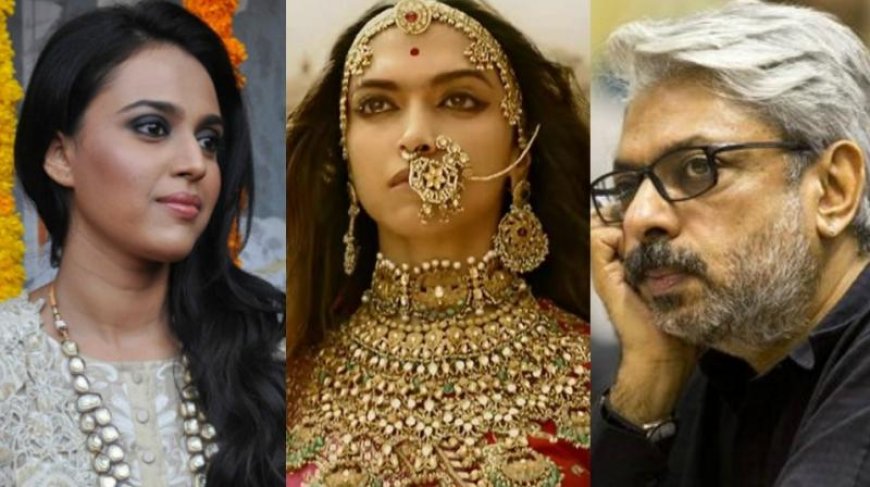
Almost a decade after Sanjay Leela Bhansali’s Padmaavat became one of Bollywood’s biggest controversies, actress Swara Bhasker has once again addressed the debate surrounding the film’s portrayal of jauhar.
In an exclusive interview published on September 28, Swara spoke about the backlash that followed her recent comments on the film and described the controversy as something she believes was consciously “constructed.” Her latest comments come after weeks of renewed discussion surrounding her views on the film’s climax and its depiction of women and sexual violence.
The controversy originally resurfaced at a Delhi event in late August, when Swara discussed the reaction she had to Padmaavat and revisited the open letter she had written to Bhansali following the film’s release.
What Did Swara Bhasker Say About Padmaavat?
Swara's original criticism was focused on the jauhar sequence shown at the end of Padmaavat.
The film depicts hundreds of women choosing collective self-immolation as Alauddin Khilji's forces approach Chittor. Swara said she was disturbed by what she believed the sequence could communicate to survivors of sexual violence.
She questioned whether presenting death as the way to preserve honour could potentially create a harmful message for women who survive sexual violence.
Her comments were subsequently widely discussed on social media, with critics arguing that the historical context of jauhar should be considered when interpreting the scene.
Why Did the Controversy Explode Again?
The current controversy began after a clip from Swara's appearance at an event in Delhi circulated online.
In the discussion, she recalled the thoughts that led her to write her open letter to Bhansali after watching Padmaavat. Her comments about the jauhar scene were interpreted by some viewers as criticism of the women who participated in the historical practice.
That interpretation led to a strong online backlash.
Several users accused Swara of overlooking the historical circumstances surrounding jauhar, while others focused on her comparison between the film's depiction and the experience of rape survivors.
Swara Said Her Comments Were Misinterpreted
Following the backlash, Swara released a clarification.
She said she never called Rani Padmaavati or the women who committed jauhar “cowards.” According to her clarification, her point was about how a rape survivor might feel after watching the film's depiction of women choosing death rather than facing captivity.
She argued that her comments had been circulated without the larger context of what she was discussing.
This clarification became another major part of the debate.
What Is Swara Saying Now?
In the latest interview published on September 28, Swara has revisited the controversy once again.
She described the backlash surrounding her remarks as a “constructed controversy”, suggesting that her original point was reframed into something she did not intend to say.
Her latest comments essentially return the conversation to the question she says she was trying to raise: how popular cinema portrays women, honour, sexual violence and survival.
However, her interpretation remains a personal perspective, and the criticism surrounding it has continued.
Padmaavat Writer Defended the Jauhar Scene
The renewed debate has not been one-sided.
Prakash Kapadia, one of the writers of Padmaavat, defended the film's depiction of jauhar after Swara's comments resurfaced.
Kapadia argued that the sequence represented the historical reality and circumstances of the period portrayed in the film. His response provided a contrasting perspective to Swara's criticism of the scene.
This difference of interpretation is at the centre of the renewed debate.
Ranvir Shorey Also Reacted
Actor Ranvir Shorey also criticised Swara's remarks in September.
In a social-media post, Shorey questioned the connection between the film's depiction of historical jauhar and Swara's comparison with modern-day sexual-violence survivors. His comments added another celebrity voice to the discussion.
The exchange demonstrates how the controversy has moved beyond Swara's original comments and into a wider discussion about history, cinema and the representation of women.
Why the Jauhar Scene Remains Controversial
The climax of Padmaavat has always been one of the film's most discussed sequences.
The scene depicts the women of Chittor entering a mass self-immolation before the expected capture of the fort. In the film, the sequence is presented as an act connected to honour and resistance.
Swara's objection focuses on the message such imagery can communicate to modern audiences, particularly survivors of sexual violence.
Those defending the sequence, meanwhile, argue that it needs to be understood within the historical setting represented by the film rather than through a modern social framework alone.
These are two different approaches to interpreting the same cinematic sequence.
The Original Padmaavat Controversy
Padmaavat, starring Deepika Padukone, Shahid Kapoor and Ranveer Singh, was itself surrounded by controversy before its 2018 release.
The film faced protests and objections over its portrayal of Rajput history, particularly around the character of Rani Padmavati and the alleged possibility of a romantic dream sequence involving Padukone's character and Alauddin Khilji.
The makers repeatedly maintained that the film did not contain such a romantic sequence.
The controversy became one of the biggest pre-release debates surrounding a Hindi film in the late 2010s.
Swara’s 2018 Open Letter
After watching the film, Swara wrote an open letter to Sanjay Leela Bhansali.
The letter became widely discussed because of its provocative language and her criticism of the film's treatment of women's bodies, honour and sexual violence.
One phrase from the letter — “I felt like a vagina” — received particularly widespread attention at the time.
Swara has now explained that the line was intended to express her broader concern about reducing women to their bodies, rather than being the entire argument of her letter.
A Debate That Has Returned Eight Years Later
What makes the latest controversy unusual is that Padmaavat was released in 2018, yet the debate has returned strongly in 2026.
The renewed discussion began with Swara revisiting her own comments, followed by criticism from social-media users and responses from other people associated with the film or Bollywood.
Swara's latest interview now adds another layer to the story by addressing how she believes the controversy around her comments developed.
What the Controversy Really Shows
At its core, the debate is about how historical events should be represented in popular cinema and how audiences should interpret those representations today.
One side of the discussion focuses on historical context and the meaning of jauhar within the period portrayed.
The other focuses on the potential contemporary impact of showing death as a response to sexual violence and the way such imagery can be interpreted by modern viewers.
Neither interpretation changes the basic fact that Swara's comments have once again reopened a conversation that had largely faded from mainstream entertainment coverage.
Final Thoughts
Swara Bhasker's latest comments have brought the Padmaavat jauhar debate back into the spotlight.
Her position is that the controversy surrounding her remarks was consciously constructed and that her original criticism was aimed at the film's messaging rather than at Rani Padmaavati or the women depicted in the jauhar sequence. She has also previously clarified that she did not call them cowards.
At the same time, the film's writer Prakash Kapadia and others have offered different interpretations of the sequence and its historical context.
For now, the debate remains a clash of perspectives over history, cinema, women's representation and the way audiences interpret difficult historical subjects.
What began with a film released in 2018 has once again become a major Bollywood conversation in 2026.