











Sheikh Hasina Says She Will Return to Bangladesh Only After Legitimate Government
Sheikh Hasina rejects extradition demand, says she will return to Bangladesh only after legitimate government and independent judiciary.
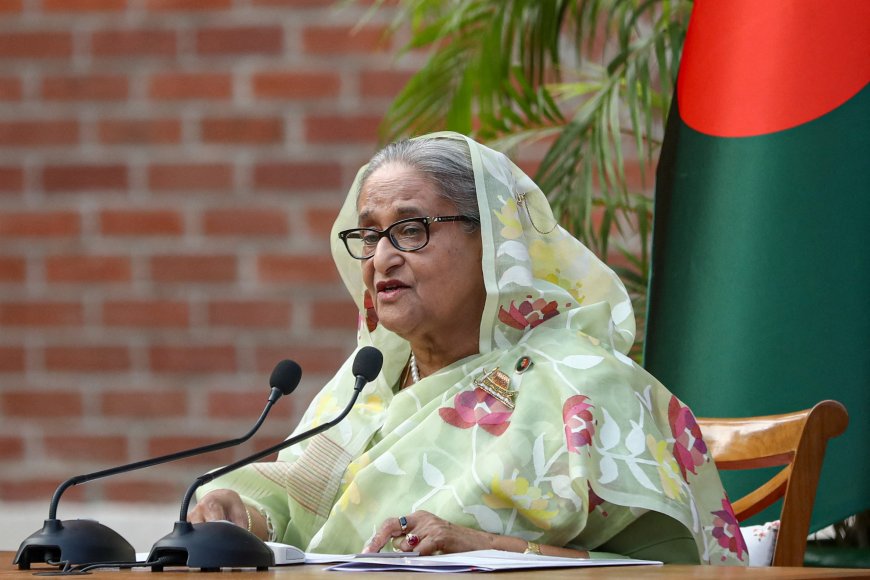
Former Bangladesh Prime Minister Sheikh Hasina has spoken out strongly against the Muhammad Yunus-led interim government, rejecting its demand for her extradition and accusing it of lawlessness, political vendetta, and destabilising the country. Speaking amid fresh protests and violence in Bangladesh, Hasina said she would return only when the country has a legitimate government and an independent judiciary.
Her remarks come after renewed unrest following the death of student leader Sharif Osman Hadi, which has once again put Bangladesh’s political crisis in the global spotlight.
1. Sheikh Hasina Breaks Silence on Return to Bangladesh
Sheikh Hasina has clearly stated that she has no plans to return to Bangladesh under the current interim setup. She said she would come back only when democratic legitimacy and judicial independence are restored.
“When Bangladesh has a legitimate government and an independent judiciary, I will gladly return to the country I have served all my life,” she said in an interview.
2. Background: July 2024 Student Uprising
The current crisis traces back to July 2024, when massive student-led protests erupted across Bangladesh. The unrest eventually led to the toppling of Hasina’s government, forcing her to leave the country to prevent further violence.
3. Sheikh Hasina Living in Self-Exile in India
Following her exit from Bangladesh, Hasina flew to India, where she has been living in self-exile at a secure location in Delhi. Her son, Sajeeb Wazed, earlier confirmed that India continues to provide her full security.
4. Death Sentence by Bangladesh’s ICT
In November, Bangladesh’s International Crimes Tribunal (ICT) found Hasina guilty of “crimes against humanity” linked to the July protests. She was convicted on multiple charges and handed the death penalty, a move she has strongly rejected as politically motivated.
5. Hasina Rejects Extradition Demand
Dismissing demands for her extradition, Hasina called the Yunus administration “desperate and adrift.” She said the ICT process was a “kangaroo tribunal” created to eliminate political opponents.
“You cannot demand my return to face my political assassination,” she said.
6. Challenges Yunus to Take Case to The Hague
Hasina said she is confident that an independent international court would clear her name. She challenged Yunus to take the allegations to The Hague, stating that she would be acquitted in a fair judicial process.
7. Slams Yunus Government Over Lawlessness
Referring to the killing of student leader Sharif Osman Hadi, Hasina said violence has become routine under the interim government. She accused Yunus of either denying the situation or being unable to control it.
“Violence has multiplied under Yunus,” she said, warning that instability is harming Bangladesh internally and externally.
8. Allegations of Extremist Influence
Hasina alleged that the Yunus government has placed extremists in key positions, released convicted terrorists, and allowed radical groups to influence public life.
She warned that Yunus is being used as a “moderate face” while institutions are being quietly radicalised.
9. Strong Remarks on India-Bangladesh Relations
Speaking on bilateral ties, Hasina accused the Yunus government of issuing hostile statements against India and failing to protect religious minorities. She said this has strained relations between the two neighbours.
“India has been Bangladesh’s most steadfast friend for decades,” she said, expressing confidence that ties would improve once legitimate governance returns.
10. Hasina Confident of Political Comeback
Despite the charges and exile, Hasina maintained a confident tone. She said temporary governments may come and go, but the foundations of India-Bangladesh relations and democratic governance will endure.
She expressed hope that Bangladesh would soon return to stability and democratic order.
Conclusion
Sheikh Hasina’s remarks underline the deep political divide in Bangladesh as protests, violence, and diplomatic tensions continue. By rejecting extradition and setting clear conditions for her return, Hasina has drawn a firm line against the interim government led by Muhammad Yunus. As the crisis unfolds, regional and international attention remains focused on Bangladesh’s future political direction.