










Jantar Mantar Protest Update: CJP Leaders Detained, Delhi on High Alert
CJP leaders were detained ahead of the October 10 Jantar Mantar protest. Read about Delhi's security restrictions, voter-list concerns and the Supreme Court's response
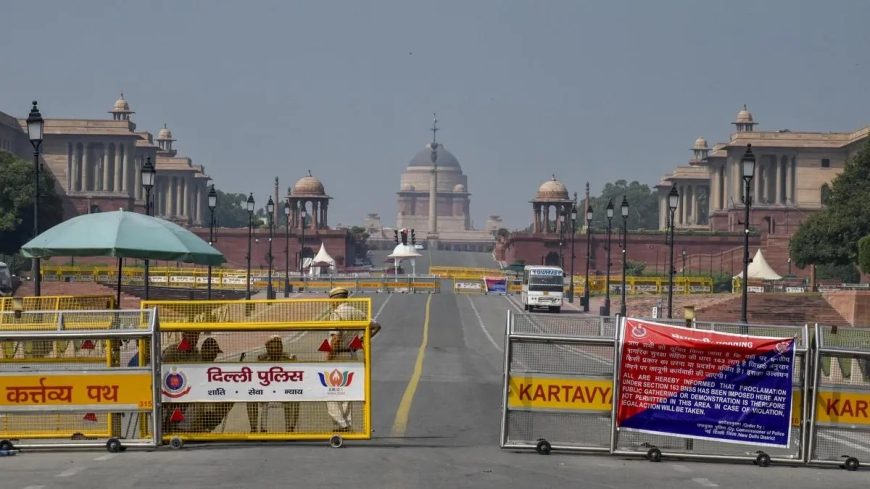
New Delhi witnessed heightened security on October 10, 2026, as the Delhi Police took preventive measures ahead of a planned protest at Jantar Mantar by the Cockroach Janta Party (CJP). The demonstration was planned against Chief Election Commissioner Gyanesh Kumar, with organisers raising concerns about the revision of electoral rolls and voter registration.
CJP leaders Abhijeet Dipke, Saurav Das and Ashutosh Ranka were detained inside an aircraft after it landed at Delhi airport. They had travelled from Mumbai to participate in the proposed demonstration. The party said the detentions prevented its leaders from reaching the protest venue.
The development brought renewed attention to the planned demonstration, the police restrictions imposed in the capital and the debate over how authorities should balance public order with peaceful protest.
Why Was the CJP Planning a Protest?
The proposed demonstration focused on concerns surrounding the Special Intensive Revision (SIR) of electoral rolls and Form 6, which is used for applying for inclusion in the voter list.
CJP leaders called for accountability from Chief Election Commissioner Gyanesh Kumar and raised allegations of irregularities in the voter-list revision process. These are allegations made by the protesters and should not be treated as established findings without supporting evidence.
Electoral-roll revisions are intended to update voter records, but questions about deletions, registration and access to voting rights can have significant public implications. The central issue is whether eligible voters can register and whether corrections and appeals are accessible when names are missing.
The Election Commission's explanations and the applicable revision records are important for assessing individual claims. The protest itself does not establish that alleged irregularities occurred.
Why Did Delhi See Heavy Security Restrictions?
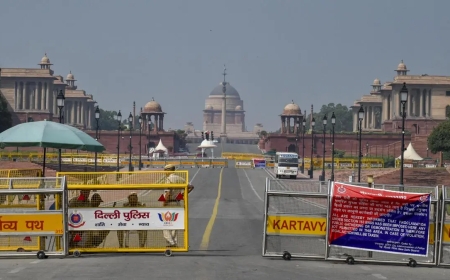
Authorities introduced extensive security arrangements around central Delhi before the planned gathering. These included barricades, restrictions on movement, traffic diversions and limits on access to sensitive areas.
Mobile internet services were also scheduled to be suspended for 24 hours within a four-kilometre radius of the Janpath–Kartavya Path crossing, from 10 pm on October 9 until 10 pm on October 10, according to media reports. The restrictions were presented as security measures connected with the anticipated gathering. Source: Economic Times
Delhi Police had denied permission for the proposed protest. Authorities cited concerns relating to public order and compliance with protest procedures. The CJP, however, maintained that its leaders were being prevented from exercising their right to demonstrate.
The scale of the restrictions also affected ordinary commuters, making transport access a major part of the day's developments.
What Did the Supreme Court Say About Metro Restrictions?
The transport restrictions drew attention from the Supreme Court on October 9, a day before the planned protest.
The court questioned the proportionality of blanket restrictions on essential public transport, including directions affecting Delhi Metro stations and railway services. It made clear that security measures should not result in a complete prohibition on Metro movement and called for services to operate in a regulated manner where appropriate.
The court also asked authorities to consider suitable locations with basic facilities for peaceful and lawful demonstrations. Its observations highlighted the need to maintain public order without creating unnecessary hardship for residents and commuters.
The court's intervention concerned the transport restrictions; it should not be interpreted as a final ruling on every allegation raised by the CJP or as permission for any gathering regardless of applicable rules. Source: The Tribune
What Does the Incident Mean for the Right to Protest?
The events have renewed discussion about the practical balance between peaceful assembly and public safety.
In India, citizens have constitutional protections relating to peaceful assembly, subject to reasonable legal restrictions. Authorities can regulate demonstrations to address genuine security and public-order concerns. At the same time, the necessity and scope of restrictions can be questioned, particularly when they affect transport, movement or access to public spaces.
The detention of protest organisers raises questions about the circumstances and legal basis for preventive action. Those questions must be assessed through the relevant orders, legal procedures and any subsequent judicial review rather than through political claims alone.
For the public, access to reliable information is equally important. Claims about voter-list changes should be checked against official records, while claims about police action should be assessed using documented orders and independently verified reporting.
What Happens Next?
The immediate questions concern the status of the detained leaders, the extent to which the planned demonstration could proceed, and whether transport and other restrictions would be modified as the security situation developed.
Further clarity may also emerge from official statements, court proceedings and information about the electoral-roll revision process. Any new developments should be distinguished from claims that remain unverified.
Readers should check current Delhi Police and Delhi Metro advisories before travelling through central Delhi, as restrictions and service arrangements can change.
Final Thoughts
The Jantar Mantar protest on October 10 has brought together several important public issues: electoral-roll transparency, the regulation of demonstrations, preventive detention and access to essential public transport.
The facts of the detentions and the restrictions are central to understanding the incident, while the allegations made by protesters require independent examination. A clear assessment will depend on official records, verifiable evidence and the outcome of any relevant legal proceedings.