














Blood Moon 2025: Stunning Total Lunar Eclipse Turns Moon Red Worldwide
Blood Moon 2025 dazzled billions worldwide on September 7, turning the Moon deep red during an 82-minute total lunar eclipse.
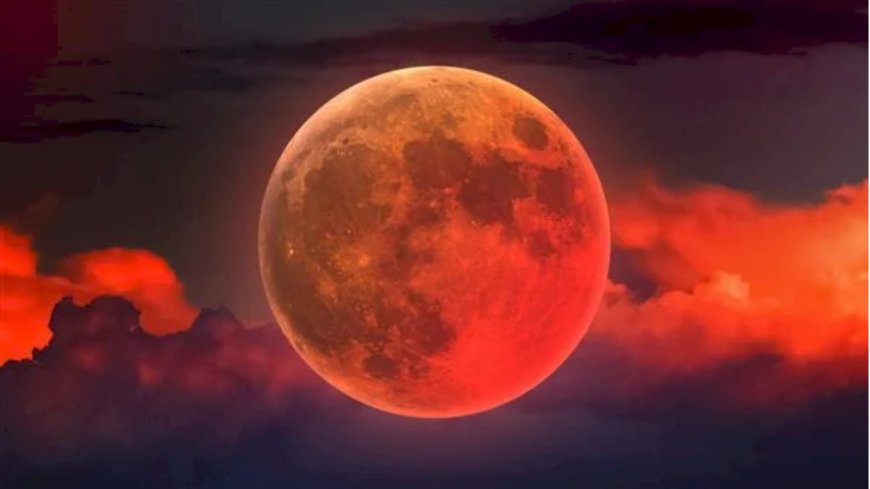
On September 7, 2025, millions of people looked up at the night sky to witness a spectacular sight – a Blood Moon. The total lunar eclipse painted the moon in shades of red, captivating sky-gazers across Asia, Europe, Africa, and Australia. For over 80 minutes, the world paused to admire this rare celestial wonder that combined science and beauty in equal measure.
1. A Rare Celestial Event
A Blood Moon occurs when the Earth moves directly between the Sun and the Moon, casting its shadow on the lunar surface. During totality, the moon takes on a deep red glow as sunlight bends and filters through Earth’s atmosphere.
2. Global Visibility of the Eclipse
This eclipse was one of the most widely observed in recent years. Reports suggest nearly 85% of the world’s population had a chance to see at least part of it. From India to Australia and the United Kingdom, millions gathered outdoors, in observatories, and online to watch the phenomenon unfold.
3. Timings Across the Globe
The eclipse began late on September 7 and continued into September 8 (UTC).
-
Totality lasted 82 minutes, from 17:30 GMT to 18:52 GMT.
-
In India, totality stretched from 10:00 p.m. to 11:22 p.m., peaking at 11:48 p.m.
-
In Australia, the event occurred in the early morning hours, while in the UK, the moon rose already eclipsed around 7:30 p.m.
4. India’s Longest Eclipse Since 2022
For Indian skywatchers, this was the longest total lunar eclipse visible since 2022 and the first seen nationwide since 2018. Astronomy enthusiasts across Bengaluru, Ladakh, and Tamil Nadu streamed the event live, helping those under cloudy skies still enjoy the experience.
5. Why the Moon Turns Red
The reddish hue comes from Rayleigh scattering, the same effect that makes sunsets look red. As Earth blocks direct sunlight, only longer red wavelengths bend through the atmosphere and fall onto the moon’s surface, creating the “blood” effect.
6. A Blend of Science and Wonder
Astronomers explained the physics, but for billions watching, the event was also deeply emotional. Many described the moon as glowing “hauntingly beautiful,” with some even calling it the most vivid Blood Moon in memory.
7. Streaming and Social Media Buzz
Live streams from observatories and amateur astronomers brought the eclipse to millions more online. Social media was filled with breathtaking images, turning the Blood Moon into one of the most shared astronomical events of the year.
8. Historical and Cultural Significance
Throughout history, Blood Moons have inspired myths, superstitions, and even predictions. While modern science explains the phenomenon, the sight continues to spark fascination and awe, connecting ancient traditions with present-day wonder.
9. When to See the Next One
Astronomers confirmed that the next total lunar eclipse visible from India will occur on December 31, 2028. While lunar eclipses happen regularly, such long totalities are relatively rare and eagerly anticipated.
10. Safe Viewing for All
Unlike solar eclipses, a lunar eclipse is completely safe to watch with the naked eye, binoculars, or telescopes. Families, students, and enthusiasts across the globe enjoyed a natural show without the need for special equipment.
Conclusion
The September 7, 2025 Blood Moon was more than just an astronomical event—it was a shared human experience. For over an hour, billions gazed at the same red moon, reminded of the beauty of the universe and the mysteries it still holds. While science explains the mechanics, the wonder it inspired remains timeless.