


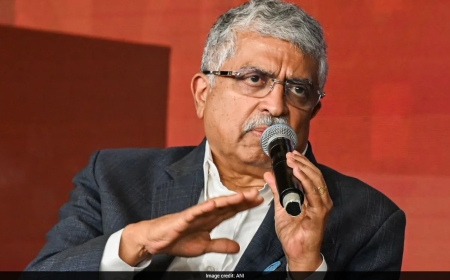











Adam Back Denies Being Satoshi Nakamoto as Bitcoin Creator Mystery Deepens
Adam Back denies being Satoshi Nakamoto as Bitcoin creator mystery deepens after New York Times investigation sparks fresh global debate.

The identity of Satoshi Nakamoto, the mysterious creator of Bitcoin, has once again come into global focus after a recent investigation by The New York Times suggested that British cryptographer Adam Back could be the person behind the pseudonym.
However, Back has strongly denied these claims, calling the theory flawed and based on “confirmation bias.” His response has reignited one of the internet’s longest-running mysteries - who really created Bitcoin?
This latest development has not only sparked curiosity among crypto enthusiasts but has also raised deeper questions about anonymity, decentralisation, and the power structure behind the world’s most influential digital currency.
The Origin of Bitcoin and the Birth of Satoshi Nakamoto
To understand why this debate matters, it is important to revisit how Bitcoin came into existence. In 2008, during the global financial crisis, a white paper titled “Bitcoin: A Peer-to-Peer Electronic Cash System” was published online under the name Satoshi Nakamoto. The document proposed a revolutionary idea - a decentralised digital currency that would operate without banks or governments.
In 2009, the Bitcoin network went live, and the first-ever Bitcoin block, known as the “genesis block,” was mined. Soon after, Satoshi Nakamoto disappeared from public communication, leaving behind a system that would go on to transform global finance. Despite years of investigation, no one has been able to definitively identify Satoshi Nakamoto.
Why Adam Back Was Linked to Satoshi Nakamoto
Adam Back has long been considered a potential candidate for being Satoshi Nakamoto. He is a respected cryptographer and the inventor of Hashcash, a proof-of-work system that influenced Bitcoin’s design. Many of the concepts used in Bitcoin were already explored in Back’s earlier work.
The New York Times investigation highlighted several points:
- Similar writing style between Back and Satoshi
- Matching technical expertise in cryptography
- Timeline overlaps in online activity
- Back’s early involvement in Bitcoin discussions
These factors led the publication to suggest that Back could be the elusive creator.
Adam Back’s Strong Denial
Adam Back quickly dismissed the claims. He stated clearly that he is not Satoshi Nakamoto and criticised the report for drawing conclusions based on selective evidence. According to Back, similarities in language and thinking are natural among experts working in the same domain.
He explained that many cryptographers share similar ideas about privacy, decentralisation, and electronic cash - making such comparisons unreliable.
Understanding “Confirmation Bias” in This Context
Back described the investigation as an example of “confirmation bias.” This means starting with a conclusion and then selectively choosing evidence to support it. In complex fields like cryptography, where many individuals contribute similar ideas, such bias can easily lead to incorrect assumptions. Back argued that the similarities highlighted in the report are coincidental rather than proof.
The Timeline Debate: Activity vs Disappearance
One of the key arguments in the investigation was the timing of Back’s online presence. The report suggested that Back was less active during the period when Satoshi was most active, and then reappeared after Satoshi disappeared. However, Back rejected this claim, stating that he was actively engaged in discussions during that time.
He said that public records and forum posts clearly show his participation, contradicting the theory.
The Massive Wealth Behind the Mystery
One of the biggest reasons why the identity of Satoshi Nakamoto matters is the enormous wealth associated with it.
It is believed that Satoshi mined over 1 million Bitcoins in the early days of the network.
At current market values, this would be worth approximately $70 billion.
If true, Satoshi Nakamoto would be among the richest individuals in the world.
Bitcoin’s Limited Supply and Its Impact
Bitcoin is designed with a fixed supply of 21 million coins. This scarcity is one of the key factors driving its value. Satoshi’s estimated holdings represent about 5% of the total supply - a significant share that could influence the market if ever moved. However, these coins have remained untouched for years, adding to the mystery.
Why Satoshi’s Identity Matters
The question of Satoshi’s identity is not just about curiosity.
It has broader implications:
- Market Stability: If Satoshi’s Bitcoins were suddenly moved, it could impact prices.
- Regulation: Governments may respond differently if the creator is identified.
- Philosophy: Bitcoin’s decentralised vision is closely tied to its anonymous origin.
The anonymity of Satoshi is often seen as a strength, reinforcing Bitcoin’s independence from any single authority.
Previous Attempts to Unmask Satoshi
This is not the first time someone has been linked to Satoshi Nakamoto.
Over the years, several individuals have been named:
- Computer scientists
- Cryptographers
- Early Bitcoin developers
In 2024, a documentary even claimed that Peter Todd was Satoshi — a claim that was widely disputed. Each new theory generates headlines but fails to provide conclusive proof.
The Role of Media in Shaping the Narrative
Investigations like the one by The New York Times play a significant role in shaping public perception. While such reports bring attention to important questions, they can also lead to speculation without definitive evidence. In the case of Adam Back, the report has sparked debate but has not resolved the mystery.
The Philosophy Behind Bitcoin’s Anonymity
Some experts believe that Satoshi Nakamoto’s anonymity was intentional. By remaining unknown, the creator ensured that Bitcoin would not be controlled or influenced by any individual.
This aligns with Bitcoin’s core philosophy of decentralisation. If Satoshi were known, their identity could become a point of central authority - something Bitcoin was designed to avoid.
Adam Back’s Contribution to Cryptography
Even though Back denies being Satoshi, his contributions to the field are significant. His work on Hashcash laid the foundation for proof-of-work systems used in Bitcoin and other cryptocurrencies. He has also been actively involved in promoting privacy-focused technologies.
The Evolution of Cryptocurrency Since Bitcoin
Since Bitcoin’s launch, the cryptocurrency ecosystem has grown rapidly. Thousands of digital currencies now exist, each offering different features and use cases. However, Bitcoin remains the most dominant and influential.
Its success has inspired innovations in:
- Blockchain technology
- Decentralised finance (DeFi)
- Digital payments
Could the Mystery Ever Be Solved?
Many experts believe that the true identity of Satoshi Nakamoto may never be revealed. Unless Satoshi themselves comes forward or moves their Bitcoin holdings, the mystery could remain unsolved.
Even then, proving the identity beyond doubt would be challenging.
The Cultural Impact of Satoshi Nakamoto
Satoshi Nakamoto has become more than just a name.
It represents:
- Innovation
- Privacy
- Financial independence
The mystery has turned Satoshi into a legendary figure in the tech world.
Conclusion
Adam Back’s denial has once again brought the spotlight back on one of the greatest mysteries of the digital age. While theories continue to emerge, the identity of Satoshi Nakamoto remains unknown. Perhaps that is what makes Bitcoin truly unique - a revolutionary system created by someone who chose to remain in the shadows.
As the world continues to explore the possibilities of blockchain and cryptocurrency, the mystery of Satoshi Nakamoto will likely remain a topic of fascination for years to come.