










Modi Avoids Trump Calls as US Slaps 50% Tariffs on India
German report claims PM Modi avoided Trump’s calls amid trade tensions, as US tariffs hit India and China ties deepen.
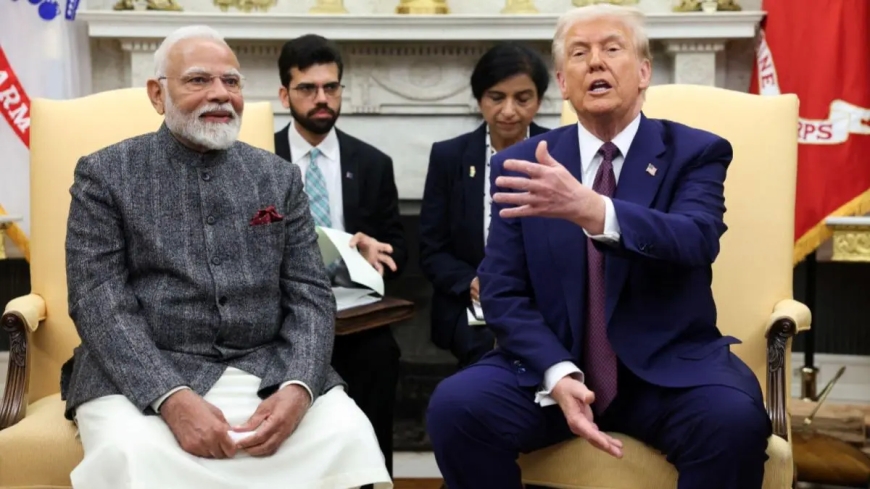
Amid rising trade tensions between India and the United States, a German newspaper has reported that Prime Minister Narendra Modi declined calls from US President Donald Trump on four separate occasions. The claim comes as Trump imposed steep new tariffs on Indian exports, raising the stakes in the already tense relationship. The situation underscores India’s balancing act—managing domestic political expectations while navigating complex global alignments.
1. Trump’s Frustration Over Trade Access
The US President has expressed frustration over India’s limited market access for American companies. His decision to impose 50% tariffs on Indian exports reflects Washington’s demand for more favorable trade terms.
2. Tariffs Take Effect This Week
The new tariffs, effective from Wednesday, are expected to hurt India’s export-driven industries, particularly textiles, gems, and auto parts. Economists warn the impact could slow India’s growth rate by at least one percentage point.
3. From Friendship to Friction
The developments stand in sharp contrast to the warmth displayed earlier this year when Modi visited Washington. Analysts say Trump’s sharp remarks, including describing India as a “dead economy,” have added to the chill.
4. Modi’s Strategic Silence
According to the German daily Frankfurter Allgemeine Zeitung (FAZ), Modi has chosen not to take Trump’s calls as a form of “strategic caution.” Experts suggest he wants to avoid being caught off guard during volatile trade negotiations.
5. Delegation Visit Cancelled
A US trade delegation had been scheduled to visit New Delhi this week to finalize a pact. Instead, the visit has been cancelled, leaving both sides without a clear pathway toward a deal.
6. The China Factor
India’s hesitation to align fully with Washington is also linked to its China strategy. Modi is scheduled to attend the Shanghai Cooperation Organisation summit in Tianjin—his first China visit in seven years. Observers believe this signals India’s broader regional ambitions.
7. Public Opinion in India
Domestically, Modi faces rising public resentment toward Trump’s policies. Analysts argue that appearing too accommodating to Washington would damage his image as a strong leader, especially ahead of key political milestones at home.
8. Trump’s Pro-Pakistan Tilt
The relationship has been further strained by Washington’s outreach to Pakistan. Trump’s claims of mediating an India-Pakistan ceasefire and hosting Pakistan’s army chief at the White House have not gone down well in New Delhi.
9. Risks of Leaning on China
While Modi’s engagement with China is seen as pragmatic, experts caution it carries risks. Long-standing border disputes and trade imbalances could limit the scope of this realignment, even as both nations look for areas of cooperation.
10. A Shifting Global Equation
The latest episode highlights the shifting nature of international alignments. With the US pursuing aggressive tariff policies and India diversifying its partnerships, the Indo-Pacific power balance is entering a new and uncertain phase.
Conclusion
Modi’s reported refusal to take Trump’s calls reflects more than just personal friction—it symbolizes India’s effort to safeguard its autonomy in a world of rapidly changing alliances. As the tariffs bite and China looms larger in the equation, New Delhi will need to walk a careful line to protect both its economic and strategic interests.