










India's First Vande Bharat Freight Train Explained: Why It's Carrying Cargo Instead of Passengers
Indian Railways has begun trials of India's first Vande Bharat Freight EMU. Here's why the new Vande Bharat train is carrying cargo instead of passengers, its top speed, features, and how it could transform freight transport.
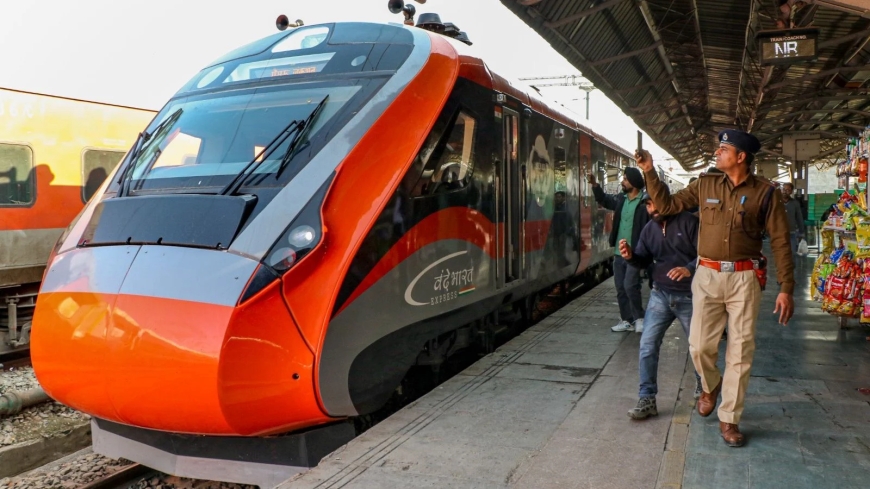
When most people hear the name Vande Bharat, they immediately think of India's premium semi-high-speed passenger trains. However, the newest Vande Bharat train rolling on Indian tracks isn't carrying passengers at all-it's transporting cargo.
Indian Railways has successfully begun technical trials of the country's first Vande Bharat Freight Electric Multiple Unit (EMU), marking a major milestone in the modernization of India's freight transportation system. Designed specifically for high-speed logistics, this new train could completely change how parcels, e-commerce shipments, and perishable goods move across the country.
Why Is This Vande Bharat Train Carrying Cargo?
Unlike the existing Vande Bharat Express trains built for passengers, this newly developed version has been specially designed for freight operations.
Its primary purpose is to transport:
- E-commerce deliveries
- Express parcels
- Refrigerated goods
- Agricultural products
- Medical supplies
- Time-sensitive cargo
Instead of passenger seating, the coaches have been modified to maximize cargo space while maintaining the speed and technology associated with the Vande Bharat platform.
The goal is to make freight movement much faster than conventional goods trains.
Successful First Trial Reaches 145 km/h
The first day of technical trials proved highly successful.
The 16-coach prototype achieved a top recorded speed of 145 km/h during testing on the Kota-Nagda-Sawai Madhopur corridor in Rajasthan.
This high-speed corridor is one of Indian Railways' most advanced testing routes and is regularly used for evaluating next-generation rolling stock before commercial deployment.
Officials described the first day's performance as a significant achievement for Indian Railways.
Month-Long Testing Programme Underway
The freight train will continue undergoing extensive testing over the coming weeks before entering commercial service.
The testing programme includes:
- High-speed oscillation tests
- Loaded and unloaded performance checks
- Emergency braking tests
- Curve stability evaluations
- Traction and braking performance
- Regenerative braking efficiency
- Signal compatibility
- Safety system verification
- Door operation testing
- Interior equipment inspections
The results will help determine whether the train is ready for nationwide freight operations.
Specially Designed for High-Speed Logistics
The new Freight EMU has been built to move cargo much faster than traditional freight trains.
It is expected to benefit sectors where delivery speed is critical, including:
- Online shopping platforms
- Courier services
- Cold-chain logistics
- Pharmaceutical transportation
- Fresh fruits and vegetables
- High-value industrial goods
By reducing transit times, Indian Railways hopes to make rail freight a stronger alternative to road transport.
Advanced Features of the Freight Vande Bharat
Although it carries cargo instead of passengers, the train is equipped with several advanced technologies.
Some of its major features include:
- A 16-coach configuration
- Refrigerated parcel coaches
- High-capacity parcel coaches
- Payload capacity exceeding 397 tonnes
- Axle load above 20 tonnes
- Vande Bharat bogies
- Modern propulsion system
- Regenerative braking
- Automatic door locking system
- KAVACH automatic train protection technology
- Pneumatic roller flooring for easy cargo loading
These features allow faster loading, safer transportation, and improved operational efficiency.
How Is It Different from a Regular Goods Train?
Traditional freight trains are designed mainly for carrying heavy bulk materials like coal, cement, steel, and minerals.
The Vande Bharat Freight EMU serves a completely different purpose.
Instead of focusing on heavy industrial cargo, it emphasizes:
- Higher speed
- Faster turnaround time
- Modern safety systems
- Express parcel movement
- Temperature-controlled cargo
- Better energy efficiency
This makes it suitable for businesses that require quick and reliable deliveries.
Kota Becomes India's Railway Testing Hub
The trials are being supervised by the Research Designs and Standards Organisation (RDSO).
Railway officials say Kota Division has become one of India's most important centres for testing advanced railway technologies.
The successful trial further strengthens Kota's reputation as the preferred testing ground for next-generation Indian Railways projects.
What Happens After the Trials?
If the month-long testing programme is completed successfully, Indian Railways is expected to introduce the Freight Vande Bharat on selected cargo corridors.
Initially, the service may focus on industries requiring rapid transportation, including logistics companies, e-commerce platforms, pharmaceutical firms, and cold-chain operators.
Over time, more Freight Vande Bharat trains could be introduced across major freight routes, helping reduce delivery times and improving supply chain efficiency.
Final Thoughts
India's first Vande Bharat Freight EMU represents a major shift in the country's railway strategy. Rather than carrying passengers, this advanced train has been developed to transport high-priority cargo quickly, safely, and efficiently. With successful trials already reaching 145 km/h, advanced safety features, refrigerated parcel coaches, and a payload capacity of more than 397 tonnes, the Freight Vande Bharat has the potential to transform India's logistics sector. If the ongoing tests are successful, Indian Railways could soon usher in a new era of high-speed cargo transportation, making rail freight faster, smarter, and more competitive than ever before.