











Former Home Minister Shivraj Patil Dies at 91: A Look at His Long Political Career
Former Home Minister Shivraj Patil passes away at 91 in Latur; a veteran Congress leader with a long and impactful political career.
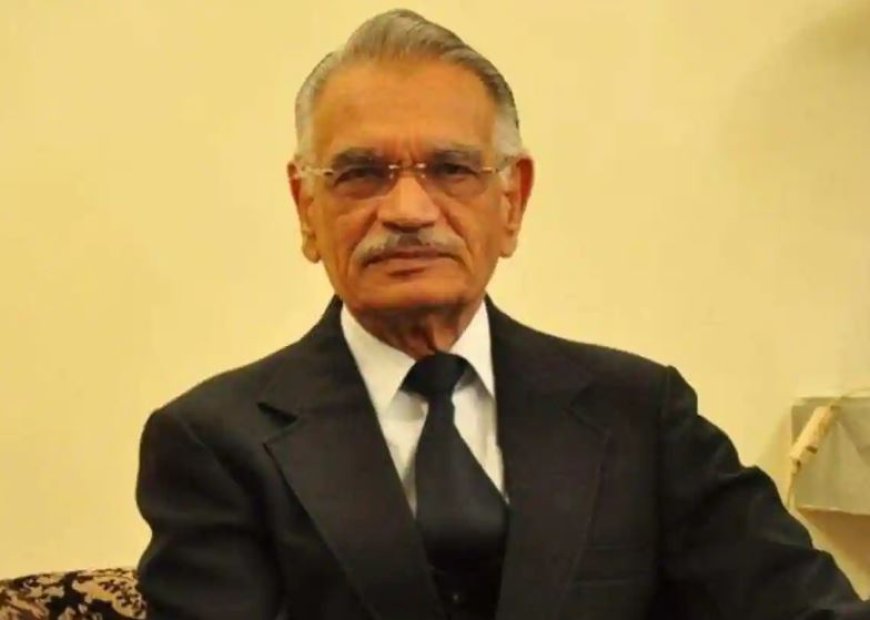
Senior Congress leader and former Union Home Minister Shivraj Patil passed away on Friday at the age of 91. He had been unwell for a long time and was living under family care in Maharashtra. With his passing, India has lost a veteran parliamentarian who devoted several decades to public life and held some of the most important positions in the country’s political system.
1. A Respected Figure in Indian Politics
Shivraj Patil was known for his calm personality, simple lifestyle and disciplined working style.
His contributions to the nation, both in Parliament and the government, have been widely acknowledged by leaders across party lines.
2. Born in Latur, Built a Career Through Hard Work
Born on 12 October 1935 in Latur district of Maharashtra, Patil came from a humble and hardworking family.
He studied law during his early years, which later helped him understand parliamentary procedures and constitutional matters deeply.
3. Entry Into Politics in 1980
Patil entered national politics in 1980, when he was elected to the 7th Lok Sabha for the first time.
From 1980 to 2004, he was elected to the Lok Sabha seven times, establishing himself as one of the most consistent and respected Members of Parliament.
4. Served as Speaker of the Lok Sabha
Shivraj Patil served as the 10th Speaker of the Lok Sabha, a role that earned him immense respect.
His knowledge of parliamentary rules and his ability to conduct proceedings smoothly made him widely admired in both the government and the Opposition.
5. Roles in Key Parliamentary Committees
During the 1980s and 1990s, Patil worked actively in the Joint Committee on Salaries and Allowances of Members of Parliament.
He later became the Chairman of the committee, contributing significantly to reforms aimed at strengthening parliamentary functioning.
6. Minister of State for Defence Under Indira Gandhi
Patil also served as the Minister of State for Defence during the tenure of former Prime Minister Indira Gandhi.
This experience deepened his understanding of national security and defence operations, which later influenced his work as Home Minister.
7. Served as Union Home Minister (2004–2008)
One of the most important phases of Patil’s career was his role as Union Home Minister in the UPA government from 2004 to 2008.
He was responsible for internal security, law and order, and coordination with states during a period marked by multiple security challenges.
8. Resigned After the 26/11 Mumbai Attacks
Following the 26/11 Mumbai terror attacks in November 2008, Patil resigned from his post, taking moral responsibility for the security lapses.
His resignation was seen as a rare act of accountability in Indian politics.
9. Served Twice as MLA Before National Politics
Before rising to prominence at the national level, Patil served two terms as a Member of the Maharashtra Legislative Assembly.
During this period, he held important positions like Deputy Speaker and Speaker of the State Assembly, gaining early experience in legislative procedures.
10. Controversy Over Changing Clothes During Crisis
Despite his long list of achievements, Patil’s career also saw controversy.
During the 2008 Mumbai attacks, he was criticised for allegedly changing clothes repeatedly between high-level meetings.
Opponents claimed that this showed insensitivity during a national crisis, although Patil never publicly responded to the criticism in detail.
Conclusion
Shivraj Patil’s political journey spanned more than four decades, during which he held some of the highest offices in Indian democracy.
From a young lawyer in Latur to Speaker of the Lok Sabha and Union Home Minister, his career reflects dedication, discipline and deep respect for parliamentary values.
His passing marks the end of an era in Indian politics, and he will be remembered for his contributions, his calm leadership style and his commitment to public service.