








Abhijeet Dipke Detained? Delhi Police Denies CJP Claim Amid 'Sansad Chalo' Protest
Delhi Police has denied claims that CJP founder Abhijeet Dipke was detained during the 'Sansad Chalo' protest near Parliament. Here's what happened at Jantar Mantar and why the claims sparked confusion
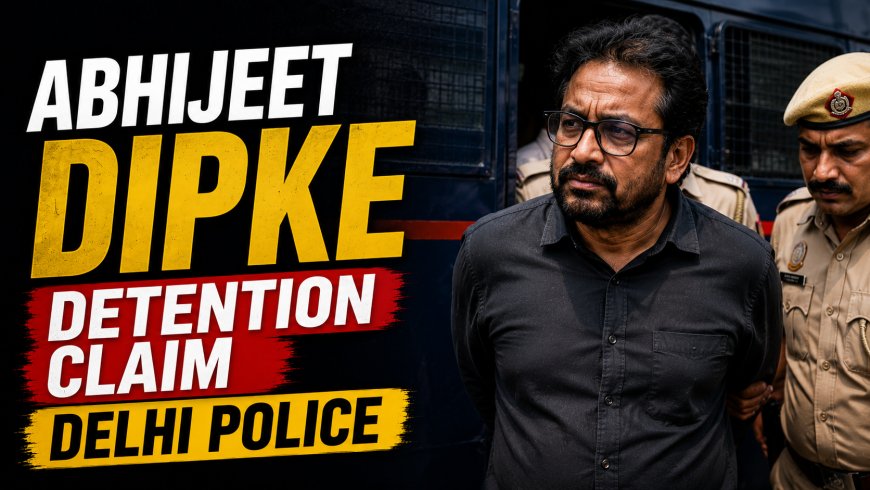
Confusion erupted during the Cockroach Janta Party's (CJP) 'Sansad Chalo' protest in New Delhi after the party claimed that its founder Abhijeet Dipke had been taken into custody by Delhi Police. The allegation quickly spread across social media as protesters attempted to march from Jantar Mantar towards Parliament on the opening day of the Monsoon Session.
However, Delhi Police strongly denied the claim, calling it "entirely false" and stating that Dipke had not been detained and was present on stage during the protest. The conflicting claims have added another layer of controversy to an already tense demonstration centred on education reforms and alleged examination irregularities.
CJP Claims Founder Was Picked Up by Police
The controversy began after CJP spokesperson Saurav Das posted on social media alleging that Abhijeet Dipke had been picked up by Delhi Police.
In his post, Das urged Members of Parliament to support the protesting students and accused police of using excessive force against peaceful demonstrators participating in the 'Sansad Chalo' march.
The claim gained rapid attention online, with several users questioning Dipke's whereabouts.
Delhi Police Issues Immediate Clarification
Within a short time, Delhi Police issued an official statement dismissing the reports.
According to the police, social media posts claiming Dipke had been detained were misleading. Authorities clarified that he had not been taken into custody and was available on the protest stage.
The police appealed to the public to avoid spreading unverified information that could create unnecessary confusion.
Heavy Security Around Parliament
The protest coincided with the opening day of the Monsoon Session of Parliament, prompting authorities to deploy additional security personnel across central Delhi.
Police set up barricades near Parliament and restricted protesters from moving beyond designated protest zones. Additional paramilitary forces were stationed at sensitive locations to prevent any disruption in the high-security area.
Protesters Stopped During 'Sansad Chalo' March
As demonstrators attempted to move towards Parliament from Jantar Mantar, security personnel blocked their route.
Reports indicated that some protesters tried to cross barricades, leading to clashes with police. Authorities responded with crowd-control measures, including a mild lathi charge and tear gas in certain areas to disperse the gathering.
Traffic movement around Parliament and nearby roads was also affected due to the protest.
Dipke Ended Hunger Strike Before March
The day's developments came shortly after Abhijeet Dipke ended his indefinite hunger strike, following an appeal from environmental activist Sonam Wangchuk.
Wangchuk, who remains admitted to Safdarjung Hospital after his own prolonged fast, had requested hospital authorities to allow him to temporarily leave the facility so he could participate in the 'Sansad Chalo' march.
His request highlighted the growing support for the movement demanding reforms in India's examination system.
CJP Leaders Meet JP Nadda
Even as protests continued outside Parliament, senior CJP leaders reportedly met Union Health Minister JP Nadda.
According to party representatives, they waited for more than two hours before being granted a brief meeting, during which they submitted a written memorandum outlining their demands.
Party leaders later claimed the minister assured them that the issues would be discussed internally, although no official announcement has been made regarding any follow-up action.
Why Is the CJP Protesting?
The Cockroach Janta Party has been holding demonstrations at Jantar Mantar since June 20, demanding accountability over alleged irregularities in competitive examinations, including NEET paper leak allegations.
The organisation is seeking:
- Comprehensive reforms in the examination system.
- Strict action against those responsible for paper leak incidents.
- Greater transparency in national entrance examinations.
- Accountability from authorities responsible for conducting competitive exams.
The 'Sansad Chalo' march was organised to bring these demands directly to the attention of lawmakers during Parliament's Monsoon Session.
Police Report Stone-Pelting During Protest
Delhi Police also alleged that some officers were injured while attempting to control the crowd.
A police official claimed that stones were thrown at personnel deployed near the barricades as protesters attempted to move towards Parliament. Authorities said security measures were necessary to maintain law and order in the restricted zone.
Meanwhile, protest organisers have continued to maintain that the demonstration was peaceful and have criticised the police response.
Final Thoughts
The conflicting claims over Abhijeet Dipke's alleged detention have become one of the biggest talking points surrounding the CJP's 'Sansad Chalo' protest. While CJP leaders accused police of detaining their founder, Delhi Police categorically denied the allegation and urged the public not to believe misleading social media posts. As Parliament's Monsoon Session continues, the protest has once again placed the spotlight on examination reforms, student concerns, and the growing debate over accountability in India's education system.